
Remote IT jobs attract thousands of applicants for every opening, yet most never get a reply. The gap between applying and actually landing interviews comes down to strategy, not luck. Targeting one role clearly and building warm introductions before cold applications dramatically reduces wasted effort and boosts response rates. This guide walks you through every step, from self-assessment to offer evaluation, so you can compete at the top of the pile.
Table of Contents
- Assess your remote readiness and goals
- Build a targeted and optimized professional presence
- Identify top remote IT job platforms and filter for high-quality roles
- Network effectively and master the targeted application
- Prepare for remote interviews and evaluate offers
- Ready to land your next remote IT job?
- Frequently asked questions
Key Takeaways
| Point | Details |
|---|---|
| Prioritize quality over quantity | Focusing on targeted roles and strong networking gets better results than mass-applying. |
| Optimize online professional profiles | A well-keyworded LinkedIn and rich portfolio attract more recruiter attention. |
| Vet job platforms carefully | Use reputable, IT-focused boards to avoid scams and surface better matches. |
| Network and follow up | Warm introductions greatly increase your response rate and interview chances. |
| Assess fit before accepting offers | Carefully evaluate company culture and benefits to set yourself up for remote success. |
Assess your remote readiness and goals
Before you send a single application, take stock of where you actually stand. Remote IT work demands more than technical skill. You need strong written communication, self-discipline, and the ability to manage your own schedule without a manager looking over your shoulder. These are learnable skills, but you need to be honest about gaps before they show up in an interview.
Weigh the real trade-offs. Flexibility is genuine, but so is the isolation. 53% of remote IT workers report feeling lonely, which affects both productivity and mental health. Building community is not optional; it is part of the job.
Clarify which IT role fits your actual expertise. Are you a backend developer, a data engineer, or are you exploring types of DevOps positions for the first time? Knowing your lane sharpens every part of your search, from keywords to salary expectations.
Key questions to answer before you start applying:
- What is your strongest technical stack? Be specific, not broad.
- What timezone are you in, and how flexible are you? Many global teams require overlap hours.
- What salary range is realistic for your role and region? Research benchmarks, not just wish lists.
- Do you prefer async or synchronous communication? This affects which companies will be a good fit.
- What does career growth look like for you in a remote setting? Promotions are less visible remotely.
Pro Tip: Join Slack communities, Discord servers, or LinkedIn groups focused on your IT specialty. Regular engagement reduces isolation and surfaces job leads before they hit public boards.
Build a targeted and optimized professional presence
Your digital presence is your first impression, and for most recruiters, it is the only one that matters before a call. 87% of recruiters use LinkedIn as their primary sourcing tool, and profiles with keyword-rich headlines get 3.5x more views. That is not a marginal difference; it is the difference between being found and being invisible.
Here is how to optimize your LinkedIn and GitHub profiles step by step:
- Rewrite your LinkedIn headline to include your role title, top skill, and the word "remote." Example: Senior DevOps Engineer | Kubernetes & AWS | Open to Remote Roles.
- Update your About section with a short paragraph that addresses your remote work experience, async communication skills, and key technologies.
- Add remote projects to your Experience section. Mention tools like Jira, Slack, or Notion to signal remote fluency.
- Pin your top GitHub repositories and make sure READMEs are clean, documented, and show real problem-solving.
- List certifications prominently. AWS, Google Cloud, and Kubernetes certs carry significant weight with technical recruiters.
- Request recommendations from former managers or colleagues who can speak to your remote work habits specifically.
Your resume needs the same treatment. Tailor it for each application, not just once. Highlight async collaboration, distributed team experience, and any tools that signal remote readiness.

| Profile element | What to include | Why it matters |
|---|---|---|
| LinkedIn headline | Role, top skill, "remote" | Increases recruiter search visibility |
| GitHub README | Clear docs, project context | Shows communication quality |
| Resume summary | Remote tools, async experience | Addresses recruiter's top concern |
| Portfolio/website | Live projects, case studies | Proves skills beyond the resume |
| Certifications | Cloud, DevOps, security certs | Validates technical credibility |
If you work in design or product, a strong portfolio matters even more. Check out how design job growth is shaping what employers expect from candidates in 2026.
Pro Tip: Post one short LinkedIn update per week, whether it is a lesson learned, a tool you discovered, or a project milestone. Consistent activity pushes your profile higher in recruiter searches without any paid promotion.
Identify top remote IT job platforms and filter for high-quality roles
Not all job boards are equal. Some aggregate thousands of listings with no quality control. Others curate verified roles from vetted companies. Knowing where to look saves hours and protects you from scams.
| Platform | Best for | Key feature | Trust level |
|---|---|---|---|
| LetsHunt.it | IT roles globally | Role-specific filters, remote focus | High |
| LinkedIn Jobs | All tech roles | Network connections, recruiter DMs | High |
| We Work Remotely | Remote-only roles | Curated, no noise | High |
| Stack Overflow Jobs | Developer roles | Tech-specific, community-backed | High |
| Remotive | Startup remote roles | Newsletter + board combo | Medium-High |
Scam listings are a real problem in remote job search. Watch for these red flags:
- Upfront payment requests. Legitimate employers never ask you to pay for equipment, training, or background checks.
- Vague job descriptions. Real roles specify tech stacks, team size, and responsibilities.
- No verifiable company presence. Check LinkedIn, Crunchbase, or the company website before applying.
- Unusually high pay for entry-level work. If it sounds too good, it usually is.
- Gmail or Yahoo email addresses used for official communication instead of a company domain.
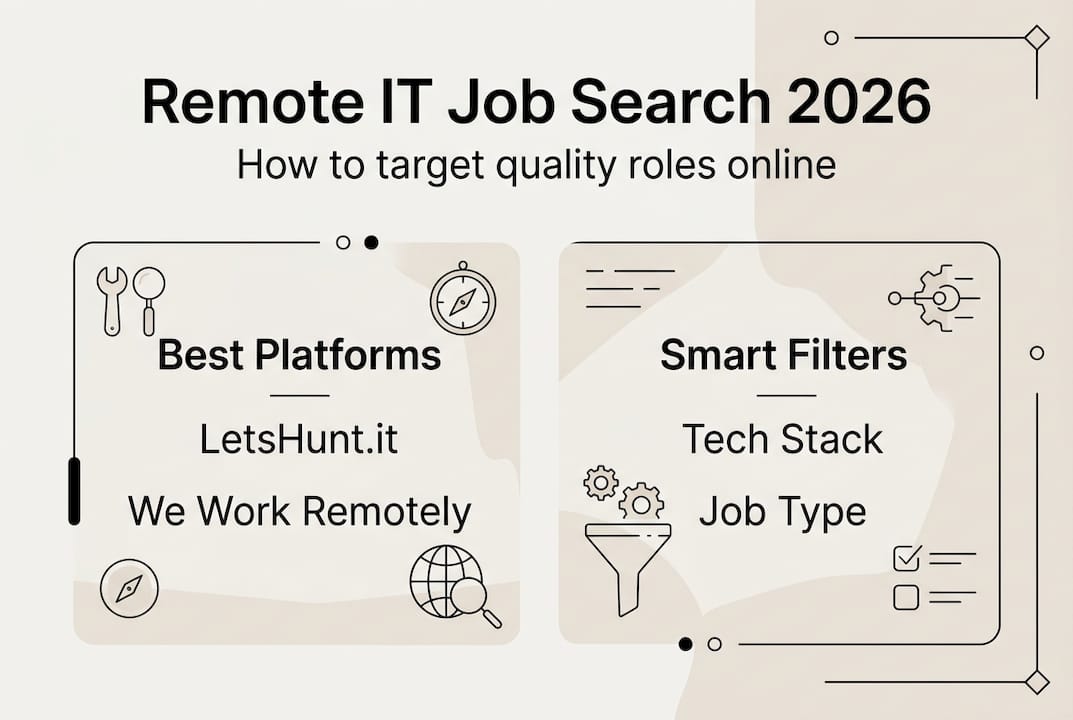
Focusing on one role at a time and using platform filters aggressively cuts through the noise. Set up job alerts with specific keywords like your tech stack, seniority level, and "remote" so you see new listings within hours of posting. You can also explore alternatives to LibHunt for discovering niche tools and communities that surface less-publicized roles. For a deeper look at how to streamline your search process, recruitment workflow tips offer practical frameworks used by both candidates and hiring teams.
Network effectively and master the targeted application
Most remote IT jobs are filled before they are publicly posted. Networking is not a soft skill add-on; it is the primary mechanism for getting in front of decision-makers. Here is a practical sequence that works:
- Identify 10 target companies where you genuinely want to work. Research their tech stack, culture, and recent news.
- Find second-degree connections at each company using LinkedIn. A mutual connection makes your outreach 5x more likely to get a response.
- Send a short, specific message to an insider. Reference their work, ask one focused question, and do not ask for a job directly in the first message.
- Engage in public tech communities where company engineers participate. Slack groups, GitHub discussions, and Twitter/X threads are all valid entry points.
- Ask for a referral only after building rapport. A warm referral from an insider can move your application to the top of the stack instantly.
"The most effective remote job seekers treat every application as a targeted campaign, not a numbers game. One well-researched, network-backed application outperforms twenty generic ones every time." Source
When you do apply, customize every cover letter and resume. Address the specific tech stack, mention the company's product or a recent engineering blog post, and explicitly state your remote work experience. Track every application in a simple spreadsheet: company, role, date, contact, and follow-up date. Follow up once after seven to ten days with a brief, professional note. Most candidates never follow up, which means you stand out simply by doing it.
Prepare for remote interviews and evaluate offers
A video interview is a performance with a technical backdrop. Test your camera, microphone, and internet connection the day before, not five minutes before the call. A dropped connection or poor audio in the first minute signals poor remote readiness to a hiring manager, regardless of your skills.
Common remote interview questions you should prepare for:
- "How do you manage your workday without direct supervision?" Have a specific system ready, whether it is time-blocking, daily standups, or async check-ins.
- "How do you handle communication across time zones?" Show you have done it before and have a clear approach.
- "Describe a time you resolved a conflict with a remote teammate." Behavioral questions about async collaboration are standard.
- "What tools do you use to stay organized and communicate?" Name specific tools and explain why you prefer them.
Remote work has real financial benefits on both sides. Companies save $11,000 per employee per year with remote workers, and employees save $4,000 to $6,000 annually on commuting and related costs. Use this context when negotiating. You are delivering value that has a measurable dollar figure attached to it.
When evaluating an offer, clarify these points before signing:
- Salary structure: Is it in your local currency or USD? How are raises handled?
- Benefits: Health insurance, pension contributions, and paid time off vary widely for remote roles.
- Remote gear stipend: Does the company provide equipment or a home office allowance?
- Trial period: Some companies use a 30 to 90 day paid trial before a full contract. Know the terms.
- Contractor vs. employee status: This affects your taxes, benefits, and job security significantly.
Pro Tip: Ask specifically how often the team communicates, what the virtual onboarding process looks like, and how performance is measured. These questions reveal company culture faster than any Glassdoor review.
Ready to land your next remote IT job?
You now have a clear roadmap: assess your readiness, sharpen your digital presence, target the right platforms, network with intention, and walk into interviews prepared. The next step is putting it into action with real job listings.
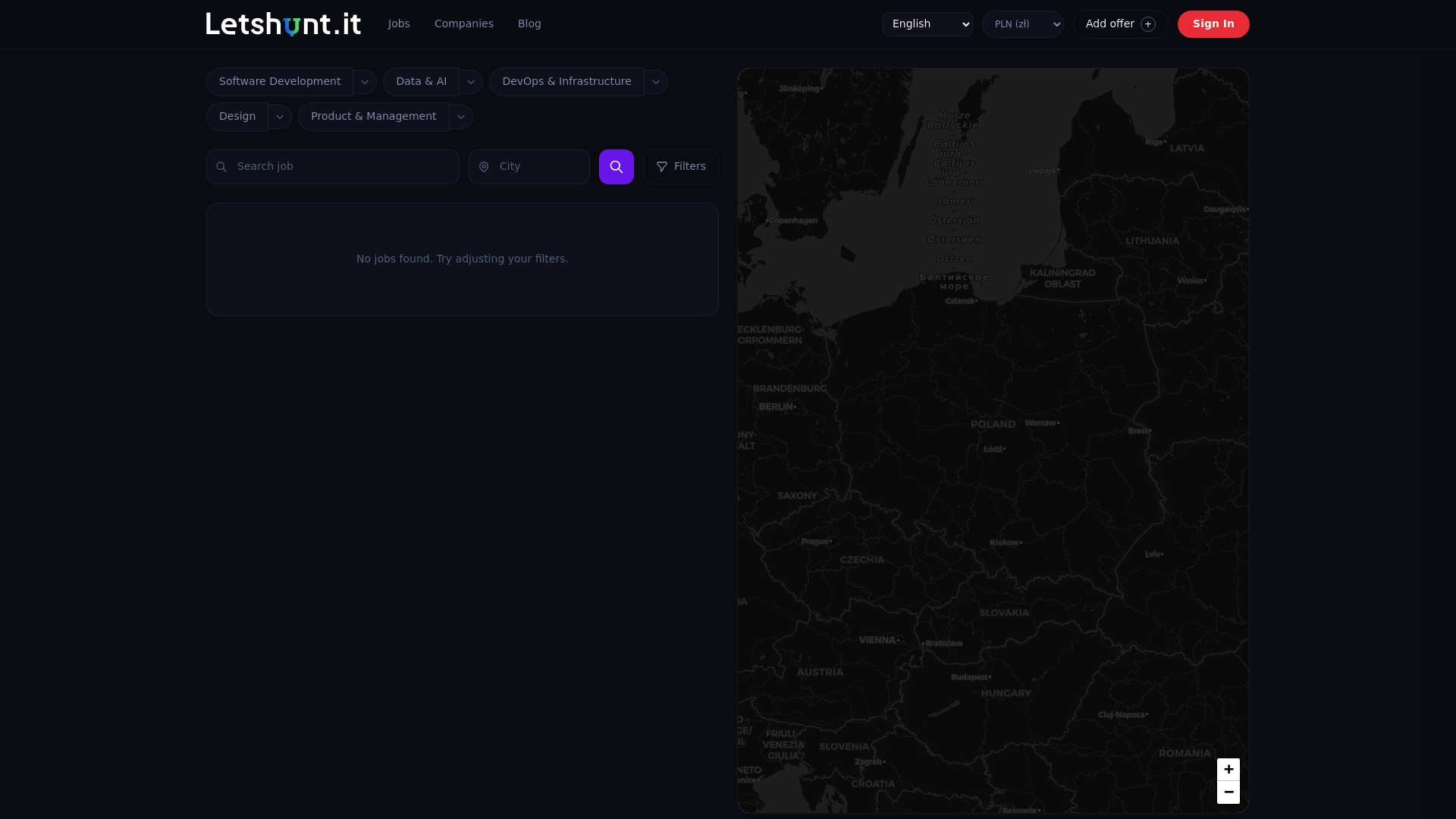
LetsHunt.it is built specifically for IT professionals searching for remote, hybrid, and on-site tech roles across software development, data, DevOps, infrastructure, design, and product management. The platform is updated continuously with verified listings from companies hiring globally, and its role-specific filters let you zero in on exactly the type of position you want. Create a free account, set your preferences, and let the right opportunities come to you instead of chasing every posting manually.
Frequently asked questions
What are the best sites for remote IT jobs in 2026?
LetsHunt.it, We Work Remotely, and LinkedIn Jobs are among the strongest options for remote IT roles. Focusing your search on one platform at a time with precise filters produces better results than spreading across dozens of boards.
How can I avoid scams when searching for remote IT jobs?
Never pay upfront for any part of a job process, and always verify the company on LinkedIn or Crunchbase before applying. Reputable platforms like LetsHunt.it vet listings to reduce fraudulent postings.
How important is LinkedIn for finding remote IT jobs?
87% of recruiters use LinkedIn as their primary sourcing tool, making it the single most important platform to optimize. Keyword-rich headlines and consistent activity directly increase how often your profile appears in recruiter searches.
What IT roles are most in demand for remote work?
Software development, DevOps, data engineering, and cybersecurity lead demand for remote positions in 2026. Exploring types of DevOps positions is a good starting point if you are considering a move into infrastructure or platform engineering.
What are the common challenges of remote IT work?
53% of remote IT professionals report loneliness as a significant challenge. Proactively joining online communities and scheduling regular virtual interactions with colleagues makes a measurable difference in both wellbeing and career visibility.