
TL;DR:
- Tech freelancing offers control over clients, rates, and work environment, improving quality of life.
- Success requires managing risks like income volatility, client acquisition, and self-employed taxes.
- Building systems, specializing in high-value niches, and leveraging AI skills drive long-term thriving.
Freelancing in technology is not just working from home in pajamas. It is a full business model where you control your clients, rates, and direction. Many people assume it is a side hustle or a backup plan, but 68% of tech freelancers report an improved quality of life compared to traditional employment. That shift in perspective changes everything. This guide walks you through what tech freelancing actually is, the real benefits and risks, how the mechanics work day to day, and practical strategies to build a sustainable independent career in technology.
Table of Contents
- What is freelancing in technology?
- Key benefits: Autonomy, earnings, and quality of life
- Common challenges and risks for tech freelancers
- How freelancing works: Processes, tools, and pricing
- A fresh perspective: The real keys to thriving in tech freelancing
- Get started: Find your next tech freelance job
- Frequently asked questions
Key Takeaways
| Point | Details |
|---|---|
| Freelancing defined | Freelancing is independent, project-based work, with flexible schedules and self-managed contracts. |
| Major benefits | Tech freelancers enjoy autonomy, higher earning potential, and improved quality of life. |
| Risks and challenges | Income volatility, taxes, and client acquisition require careful management. |
| Expert advice | Niche specialization, value-based pricing, and continuous upskilling drive success in tech freelancing. |
| Get started | Explore tech job boards and platforms to launch your freelance career. |
What is freelancing in technology?
Freelancing means you work independently, offering your skills to multiple clients rather than committing to a single employer. You are not on anyone's payroll. Instead, you choose your own projects, clients, and schedules, negotiating terms directly and delivering results on your own timeline.
In the tech industry, freelance roles span a wide range of specializations. Here are some of the most common:
- Software development (web, mobile, backend, frontend)
- AI and machine learning integration
- UX and product design
- DevOps and cloud infrastructure
- Data engineering and analytics
- Cybersecurity consulting
- Technical writing and documentation
The variety is significant. A backend developer might build APIs for a startup one month and optimize database performance for an enterprise the next. That range is part of what makes tech freelancing so appealing.
Here is a quick comparison of how freelancing differs from traditional employment:
| Factor | Freelancer | Employee |
|---|---|---|
| Income source | Multiple clients | Single employer |
| Schedule control | Full | Limited |
| Benefits | Self-managed | Employer-provided |
| Job security | Variable | More stable |
| Earning ceiling | Uncapped | Fixed salary |
To find clients, most freelancers start on platforms. Upwork, Fiverr, Toptal, and LinkedIn are major freelance hubs where you can build a profile, showcase your portfolio, and bid on projects. You can also explore dev-task.com alternatives or browse IT job boards to find project-based opportunities beyond the usual platforms.
One major shift worth noting: AI is changing what clients actually need. Low-level coding tasks are increasingly automated. What clients want now are freelancers who can integrate AI tools, architect scalable systems, and deliver business outcomes. If you want to understand freelance viability in 2026, the answer is yes, but only if you adapt to where demand is moving.
Next, let's explore why so many are pursuing this path and the real benefits of tech freelancing.
Key benefits: Autonomy, earnings, and quality of life
The appeal of tech freelancing goes well beyond flexibility. It touches nearly every dimension of how you work and live.
Schedule and location freedom are the most obvious draws. You decide when you work and from where. A developer in Austin can take on a client in Berlin without relocating. A UX designer can block off Friday afternoons to spend with family. This kind of control is rare in traditional employment.
Earning potential is another major factor. Employees are capped by salary bands. Freelancers are not. When you specialize and build a reputation, you can raise your rates, take on premium clients, and work fewer hours for the same or better income. The fulltime freelance guide recommends building a niche early to command higher rates faster.
Here is how the freelance and employee experience compare across key quality-of-life factors:
| Quality factor | Freelancer | Employee |
|---|---|---|
| Work location | Anywhere | Usually fixed |
| Schedule | Self-set | Employer-set |
| Career growth | Self-directed | Manager-dependent |
| Income growth | Unlimited | Incremental raises |
| Work variety | High | Often repetitive |
Other notable benefits include:
- Variety of work: You choose projects that interest you, which reduces boredom and builds a diverse portfolio.
- Direct client relationships: No office politics. You deal directly with decision-makers.
- Tax advantages: Business expenses like equipment, software, and home office costs can often be deducted.
- Skill acceleration: Working across industries and tech stacks forces faster learning.
The data backs this up. 68% of freelancers report improved quality of life after going independent. That is not a small number. It reflects a structural shift in how people want to work.
Pro Tip: Specializing in a niche, such as AI integration, cloud architecture, or fintech development, lets you charge significantly more than generalists. Clients pay a premium for expertise that solves specific, high-value problems.
For those exploring how to find these opportunities, resources on finding IT jobs and tech job search tips are worth reviewing before you start pitching.
While freelancing offers many rewards, it is equally important to understand the downsides and manage your risks.
Common challenges and risks for tech freelancers
Freelancing is not without real difficulties. Understanding them upfront is the difference between building a sustainable career and burning out within a year.

Income volatility is the most cited concern. 65% of freelancers report inconsistent income, and 42% report burnout. These are not edge cases. They are the norm for people who do not build systems around their business.
Here are the core challenges you will face:
- No employer benefits: Health insurance, retirement contributions, and paid leave are all your responsibility.
- Self-employment taxes: You pay 15.3% in self-employment tax on top of income tax. Set aside 25-35% of every payment.
- Client acquisition: Finding clients consistently is a skill that takes time to develop.
- Payment delays: Late invoices and non-paying clients are common. Contracts and upfront deposits help.
- Isolation: Working alone removes the social structure of an office, which can affect motivation.
Here is a practical approach to managing the top risks:
- Build a 3-month cash reserve before going full-time freelance.
- Diversify your client base so no single client represents more than 30% of your income.
- Use contracts for every project, no matter how small or how well you know the client.
- Automate tax savings by moving a fixed percentage to a separate account immediately after each payment.
- Schedule social time intentionally, whether through coworking spaces, online communities, or local meetups.
"The freelancers who thrive long-term are not the most talented. They are the most organized." This is especially true in tech, where project complexity and client expectations are high.
For those exploring justjoin.it alternatives or looking at ways of filtering IT jobs for freelance-friendly roles, building these habits before you land your first client will save you a lot of pain later. You can also find advanced freelancing tips that address scaling beyond solo work.
Pro Tip: Never rely on a single client for more than a third of your income. That client is effectively your employer, and you have lost the independence that makes freelancing worthwhile.
With these challenges in mind, let us look at how the mechanics of freelancing actually work and what systems you need to succeed.
How freelancing works: Processes, tools, and pricing
Understanding the day-to-day mechanics of freelancing helps you avoid the mistakes that sink most new independents in their first year.
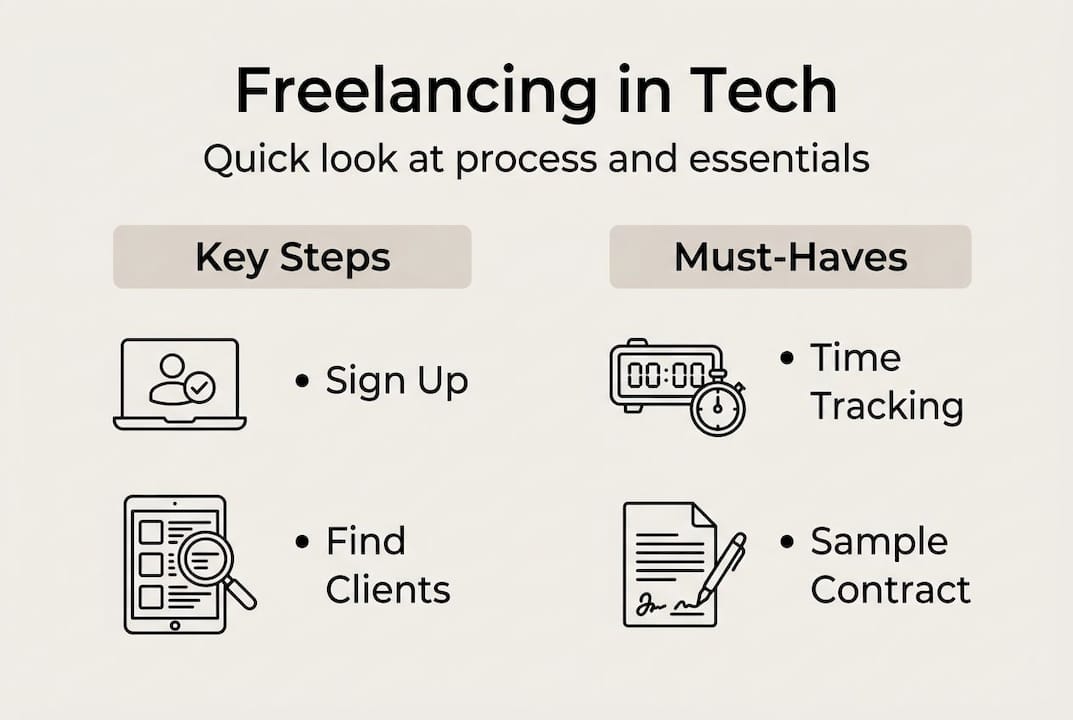
Getting started usually means joining one or more platforms. Upwork, Fiverr, Toptal, and LinkedIn remain the primary hubs, and each serves a different tier of client and project type. Toptal is selective and targets senior engineers. Fiverr works well for productized, lower-ticket services. Upwork sits in the middle. Beyond platforms, direct outreach and referrals often produce the highest-quality clients.
Contracts are non-negotiable. Every engagement needs a written agreement covering scope, deliverables, payment terms, revision limits, and intellectual property ownership. Scope creep, where clients keep adding requests beyond the original agreement, is one of the most common ways freelancers lose money and time.
Here is a breakdown of common pricing models:
- Hourly rates: Typical range is $40 to $100+ per hour for tech roles, depending on specialization and experience.
- Fixed-price projects: Works well for clearly defined deliverables like building a specific feature or designing a landing page.
- Retainer agreements: Monthly fixed fees for ongoing work. These are the most stable and predictable income source.
- Value-based pricing: Charge based on the outcome you deliver, not the time you spend. This is where experienced freelancers earn the most.
Tools matter more than most guides admit. Time tracking with Toggl keeps you honest on hourly projects. Project management with Asana or Notion helps you juggle multiple clients without dropping anything. Invoicing and payments through Stripe or PayPal make getting paid faster and more professional.
Pro Tip: Treat your freelancing as a micro-business from day one. Create templates for proposals, contracts, and invoices. Systemize client onboarding so every new project starts cleanly. The time you invest in systems pays back every single month.
For more on where to find project-based tech roles, explore job boards for tech roles and proven remote IT jobs strategies. A solid freelance tech career guide can also help you map out your first 90 days.
Now that you understand the ins and outs of freelancing, it is time to consider expert advice and the nuances that matter most in tech.
A fresh perspective: The real keys to thriving in tech freelancing
Most freelancing guides tell you to "build a portfolio" and "network consistently." That advice is not wrong, but it misses the deeper shift that separates thriving freelancers from those who quit within two years.
The freelancers who win long-term treat their career as a product. They do not just sell their time. They sell outcomes. A developer who says "I build backend systems" is competing on price. A developer who says "I reduce API response time by 40% for SaaS companies" is competing on value. That framing changes everything about how clients perceive you and what they will pay.
AI is accelerating this shift. Low-code and repetitive coding tasks are increasingly automated. The demand is moving toward integration, architecture, and problem-solving. Freelancers who upskill in AI tools and position themselves as outcome-focused specialists are seeing stronger demand and better rates.
Another overlooked truth: underpricing is not humility, it is a trap. When you charge too little, you attract clients who do not respect your time, take on too much work to compensate, and burn out fast. Raising rates is uncomfortable, but it is one of the highest-leverage moves you can make.
For those thinking about optimizing tech recruitment workflow from the client side, understanding how freelancers think about value helps you attract better talent too.
Pro Tip: Diversification and upskilling are your best defenses against volatility. Two or three strong client relationships plus one emerging skill you are developing is a more resilient position than ten small gigs with no growth trajectory.
Get started: Find your next tech freelance job
If you are ready to explore what tech freelancing looks like in practice, the right starting point is finding real opportunities that match your skills and goals.
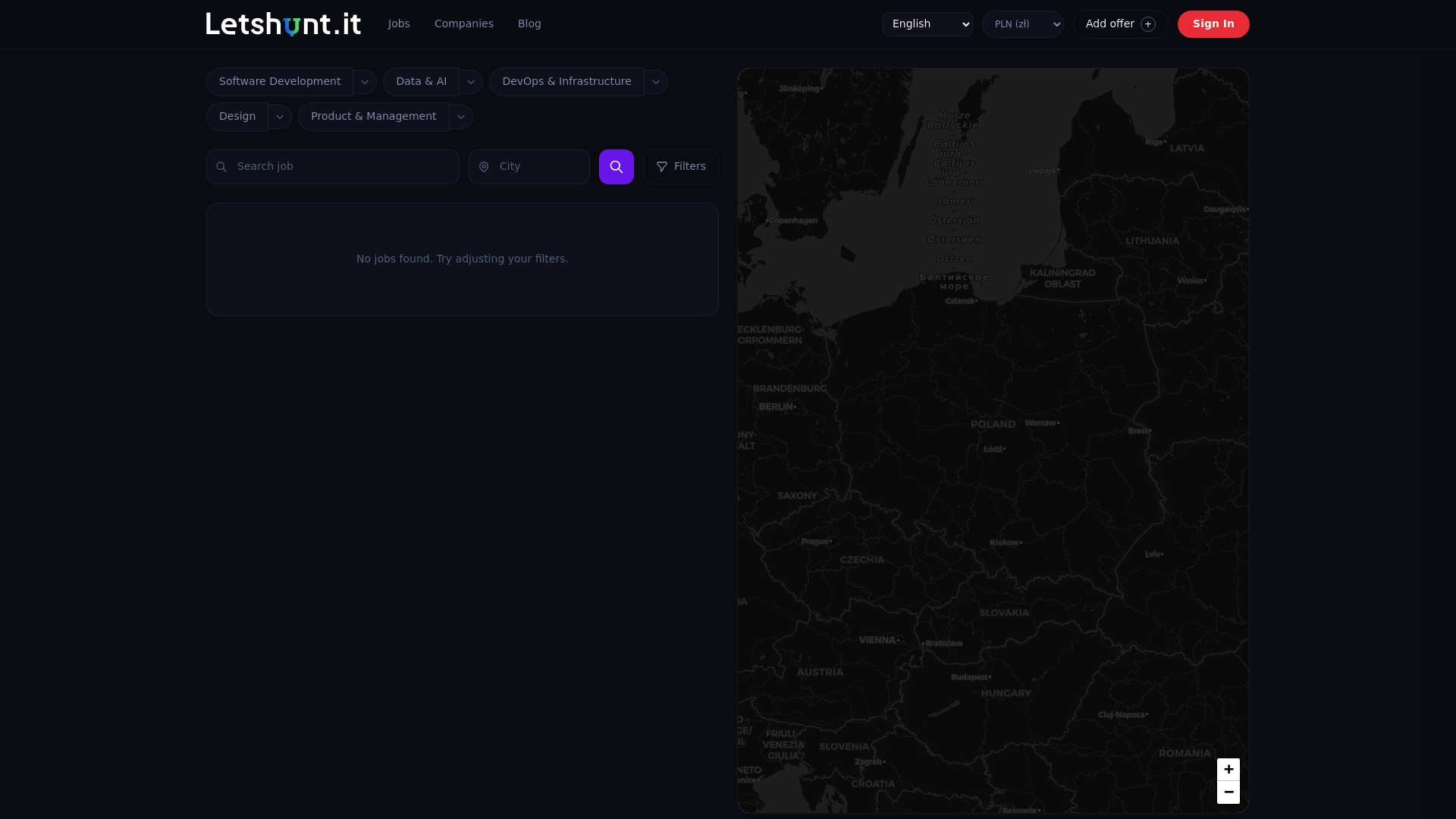
LetsHunt.it connects tech professionals with remote, hybrid, and on-site roles across software development, AI, DevOps, data, design, and product management. Whether you are looking for your first freelance project or want to expand your client base with higher-quality opportunities, the platform gives you access to roles filtered by location, tech stack, and work arrangement. Browse current listings, set up your search preferences, and take the first concrete step toward building the independent tech career you want.
Frequently asked questions
What do I need to start freelancing in technology?
To begin, select a niche, create profiles on freelance platforms, and prepare to manage contracts, pricing, and taxes from day one. Having a small portfolio of work, even personal projects, helps you land your first clients faster.
How much can a tech freelancer earn?
Hourly rates range from $40 to $100+ for tech freelance work, with annual income varying widely based on specialization, client quality, and how many hours you choose to work.
What are the biggest challenges for tech freelancers?
65% cite income volatility and 42% report burnout as major concerns, alongside lack of employer benefits, self-employment taxes, and the ongoing effort required to find and retain clients.
How does AI impact tech freelancing?
AI shifts demand toward integration and architecture, reducing the value of low-skill coding tasks while increasing opportunities for freelancers who can deliver strategic, outcome-focused technical work.
Do tech freelancers need to pay self-employment tax?
Yes. Self-employment tax is 15.3% on top of income tax, and most financial advisors recommend setting aside 25-35% of every payment to cover your full tax obligation.