
TL;DR:
- Success in international IT jobs requires systematic process discipline and tailored strategies.
- Building a globally optimized profile, focusing on targeted regions, and mastering remote communication are crucial.
- Networking early and maintaining an organized application pipeline significantly increase hiring chances.
Landing an international IT job is harder than most job seekers expect. Skilled developers, data scientists, and project managers routinely lose opportunities not because they lack talent, but because they apply the same local habits to a global search. The competition is real, the biases exist, and the process looks different depending on which country you target. This guide walks you through every phase, from building a globally competitive profile to closing your offer, covering both remote and on-site roles across software development, data and AI, and project management. Follow the steps in order and you will move faster than most candidates ever do.
Table of Contents
- Understand requirements and build a global-ready profile
- Research and select your top countries or regions
- Find job openings and use the best platforms for international IT roles
- Interview, negotiate, and lock in your international offer
- Our take: What most guides miss about international IT job hunting
- Next steps: Fast-track your global IT career
- Frequently asked questions
Key Takeaways
| Point | Details |
|---|---|
| Target only top-fit regions | Research skill shortages, salary-to-cost ratios, and visa policies for the most attractive countries. |
| Optimize your global profile | Adapt your resume and highlight remote work skills to double recruitment success. |
| Leverage platforms and networking | Use job portals, create application alerts, and invest in building your international tech network early. |
| Expect a 2–4 month timeline | A structured, persistent approach lands most tech pros an international offer within four months. |
Understand requirements and build a global-ready profile
Before you submit a single application, you need the right foundation. International employers screen candidates quickly, and a poorly formatted resume or missing certification will end your chances before the conversation even starts.
Here is what a globally competitive profile includes:
- Updated tech resume or CV tailored to the standards of your target country (length, format, and section order vary significantly)
- Active portfolio or GitHub profile with recent projects that demonstrate real-world problem-solving
- Relevant certifications such as AWS, Google Cloud, PMP, or Scrum Master credentials that are recognized internationally
- LinkedIn profile with a clear headline, updated skills, and endorsements from colleagues
- Cover letter template that can be adapted per role and region
Global standards tend to favor one to two page resumes with quantified achievements. Instead of writing "managed a development team," say "led a team of 8 engineers to deliver a product 3 weeks ahead of schedule." Numbers cut through the noise. Critically, tailor your resume to country norms because a resume that works in the US will not land the same way in Germany or Singapore.
One of the most overlooked elements in 2026 is demonstrating remote and asynchronous work skills. If you have used tools like Jira, Notion, Slack, or Confluence across time zones, say so explicitly. This signals to global employers that you can operate independently without constant hand-holding.
| Region | Resume length | Key differentiator | Common certifications |
|---|---|---|---|
| United States | 1 page | Quantified impact | AWS, PMP, Scrum |
| Germany | 2 pages + photo | Formal structure | Microsoft, ITIL |
| Singapore | 1-2 pages | Multi-skill breadth | Cloud, DevOps |
| United Kingdom | 2 pages | Concise achievements | PRINCE2, AWS |
Pro Tip: Build one master profile document with all your experience, skills, and metrics. Then create targeted versions for each application. This saves time and keeps your messaging consistent without starting from scratch every time. Our proven IT job search guide walks through the full profile optimization process in detail.
Research and select your top countries or regions
Once your profile is in shape, the next step is narrowing the global market down to two or three regions where your skills are genuinely in demand. Applying everywhere sounds logical but it wastes energy and produces weak, generic applications.
Here is a step-by-step approach to shortlisting your target regions:
- Check shortage occupation lists published by government labor departments in Germany, the UK, Canada, and Australia. These lists tell you which tech roles are actively prioritized for fast-track visa approvals.
- Calculate the salary-to-cost-of-living ratio for each region. A $90,000 salary in Berlin goes further than the same number in San Francisco.
- Assess visa pathways available to your nationality. Some countries, like Germany with its Chancenkarte, offer skill-based entry without a job offer in hand.
- Check employer sponsorship rates on LinkedIn job posts in your field. If most postings in a region say "no sponsorship," adjust your target list.
- Confirm remote hiring policies for your target companies. Some global firms hire internationally only through Employer of Record platforms (third-party companies that legally employ you in your home country on behalf of a foreign firm).
Narrow your search to two or three countries based on shortage lists and salary-to-cost-of-living ratios. This focused approach dramatically increases your application quality and interview rate.
| Country | Visa friendliness | Avg. senior dev salary | Tech hiring volume |
|---|---|---|---|
| Germany | High (Chancenkarte) | $75,000-$95,000 | Very high |
| United States | Moderate (H-1B lottery) | $130,000-$180,000 | Highest globally |
| Canada | High (Express Entry) | $90,000-$120,000 | High |
| Singapore | Moderate (EP pass) | $80,000-$110,000 | High |
Pro Tip: Set up a simple spreadsheet to track visa eligibility timelines, tech salary trends, and open role counts for your two or three shortlisted regions. Revisit it monthly because policies shift. You can also explore global IT job listings filtered by region to get a real-time read on where demand is clustering.
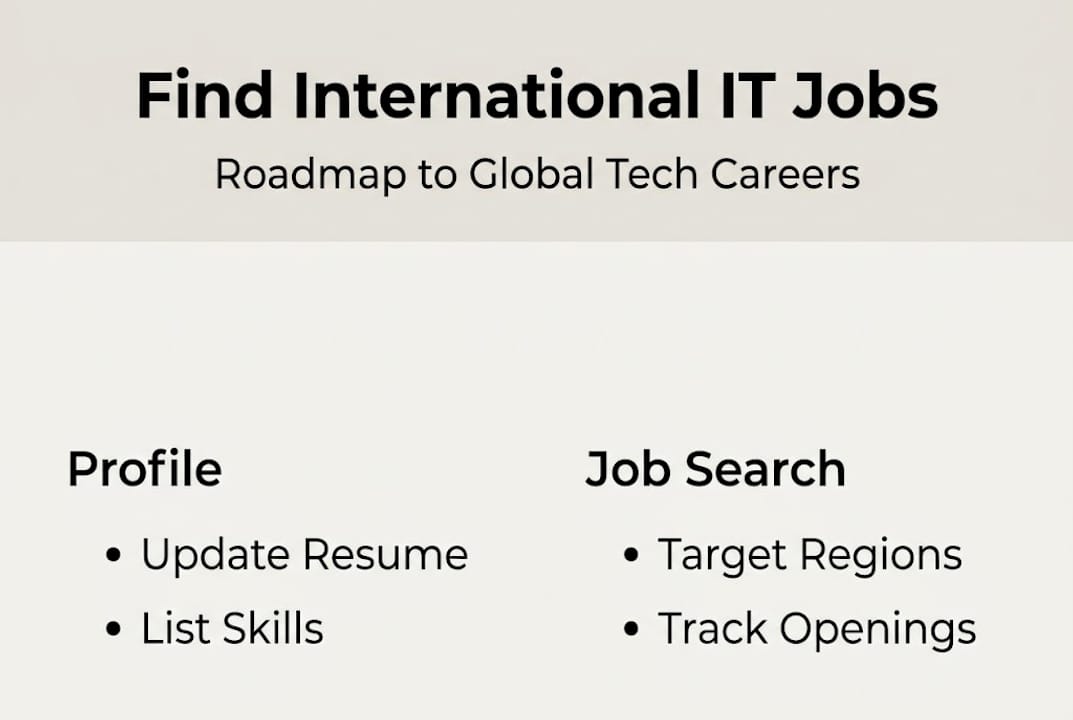
Find job openings and use the best platforms for international IT roles
With your target regions defined, you move to active sourcing. This is where most candidates either accelerate or stall, depending on how organized their system is.
The most effective global IT job platforms in 2026 include:
- LinkedIn Jobs with region, remote, and contract filters
- Stack Overflow Jobs for developer-specific roles with tech stack filtering
- Let's Hunt IT for tech-focused international listings across software, DevOps, data, and product roles
- We Work Remotely and Remote OK for fully distributed teams
- AngelList (Wellfound) for startup and high-growth company roles
Set up daily or weekly job alerts on each platform using role-specific keywords combined with your target country or "remote worldwide." This turns a passive search into a live feed of opportunities without daily manual browsing.
Here is the insight most guides skip: networking accounts for 60 to 70% of placements, and applying systematically with daily alerts compounds that advantage. Most candidates only start networking when they are already desperate. The ones who succeed internationally build their network months before they need a job.
Organized applications win. Tracking every role you apply for, including the date, status, and contact person, is not optional. Candidates who maintain a structured pipeline respond faster to interview invites and follow up at the right moments. This discipline alone separates top 10% applicants from the rest.
For remote IT job strategies that go beyond job boards, you need targeted LinkedIn outreach. Identify hiring managers or engineering leads at your target companies, comment thoughtfully on their posts, and then send a concise connection request with a specific reason for reaching out. It takes more effort than clicking Apply, but it bypasses the automated resume filter entirely.
Pro Tip: Use job boards to identify open roles, then immediately search LinkedIn for the hiring manager at that company. A warm message paired with a strong application raises your visibility dramatically. Check our guide on understanding IT job boards for a deeper breakdown of platform-specific strategies.
Interview, negotiate, and lock in your international offer
Reaching the interview stage for an international IT role is a real achievement. Now you need to convert it. Global tech employers use formats that differ from local hiring norms, and being unprepared for those differences kills otherwise strong candidacies.
Common international tech interview formats include:
- Technical screen via HackerRank, LeetCode, or a live coding session
- System design interview for senior or lead roles
- Cultural and behavioral interview using the STAR method (Situation, Task, Action, Result)
- Async take-home assignment common in remote-first companies
- Panel interview with engineering lead, HR, and sometimes a team peer
Remote-first companies specifically test for asynchronous communication skills. Can you document your decisions clearly? Do you write update messages that do not require a follow-up question? These soft skills matter as much as your code quality when the role is global.

On compensation: remote IT roles globally have a median salary of $78,000, while US-based remote roles average $112,000. With 85% of IT professionals now working remote or hybrid, demonstrating those skills yields up to twice the offer frequency.
Timeline-wise, landing a global offer typically takes four to seven months for most professionals, but tech pros with active international pipelines often close in two to four months.
Common pitfalls to avoid:
- Visa process delays: Confirm sponsorship willingness before investing weeks in interviews
- Time zone failures: Missing a call due to confusion about international time zones signals poor remote readiness
- Weak negotiation: Research local salary benchmarks, not just your home country rates, and negotiate confidently with data
Pro Tip: Prepare two or three questions specifically about remote work culture and global compensation structures. Asking "how does your team handle async communication across time zones?" signals remote maturity immediately. Review our top IT job search tips for a full list of interview preparation tactics.
Our take: What most guides miss about international IT job hunting
Most international job search guides stop at tactics. They list platforms, mention networking, and remind you to tailor your resume. What they rarely say is that the real differentiator is process discipline, not individual actions.
The candidates who consistently land international roles are not the luckiest or even the most skilled. They are the most systematic. They maintain a pipeline, follow up on time, and treat their job search like a product they are shipping.
In 2026, cultural adaptability and async communication fluency are your strongest selling points, not just your tech stack. Companies building globally distributed teams need people who can bridge time zones and communication styles without friction.
The other hard truth: most people realize networking matters only after they have spent months getting rejected through cold applications. Build your global tech job insights network before you need it. Comment on posts, join Slack communities, contribute to open source. When you eventually apply, you will already know someone at the company. That changes everything.
Next steps: Fast-track your global IT career
You now have the full roadmap: a globally competitive profile, a focused target list, a sourcing system, and the interview playbook to close offers. The next move is putting it into practice with the right tools.
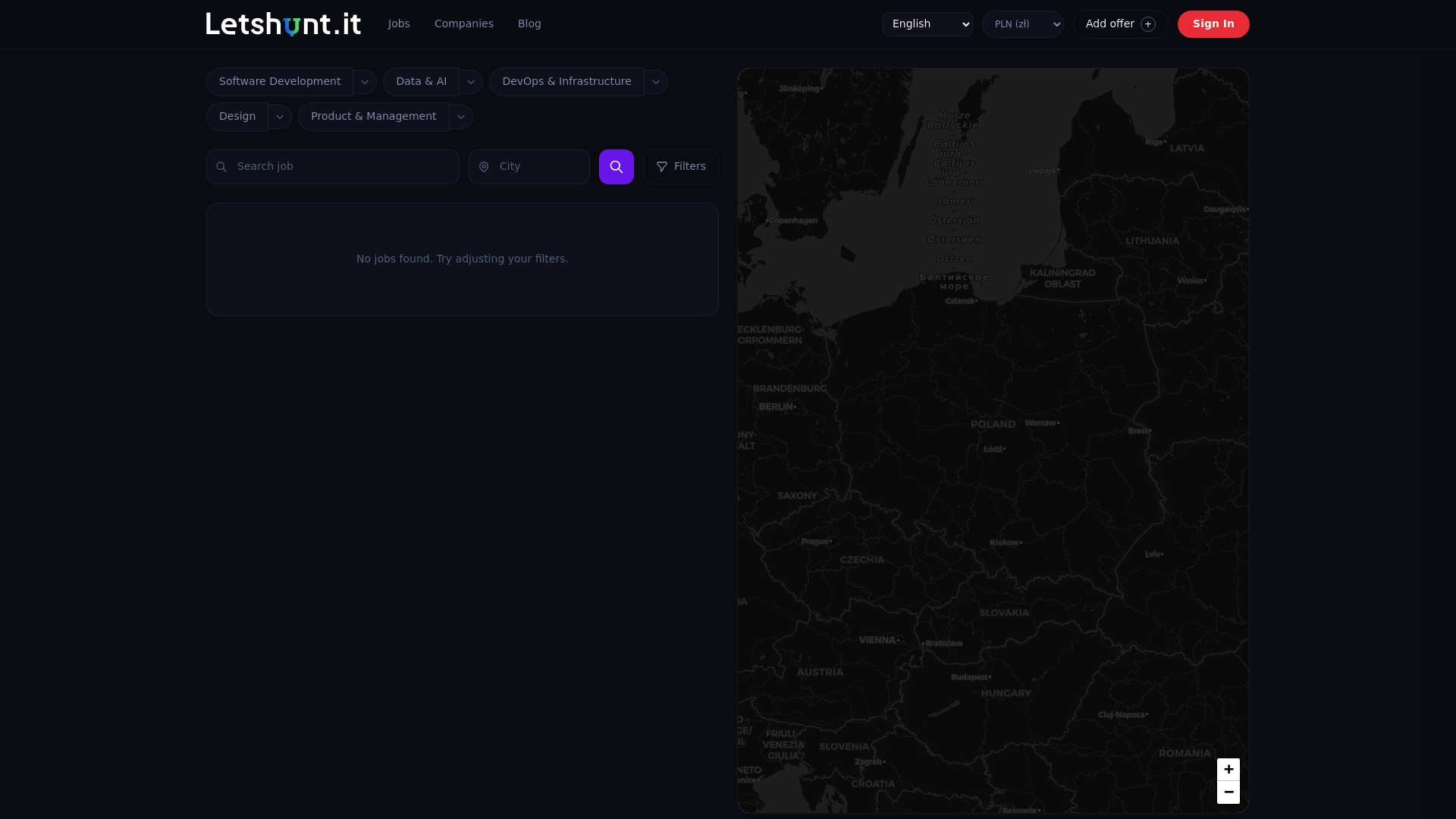
Let's Hunt IT is built specifically for tech professionals like you, with personalized search filters across software development, DevOps, data, and product roles worldwide. You can set up daily alerts for your exact role type and target region, browse remote and on-site listings in one place, and tap into a tech-focused network that is growing fast. Stop wasting time on general job boards that bury IT roles under noise. Get started with Let's Hunt IT and take your first real step toward the international career you have been planning.
Frequently asked questions
What are the fastest-growing regions for international IT jobs in 2026?
Germany, the UK, Canada, and Singapore are top picks due to tech skill shortages and welcoming visa policies. Germany's Chancenkarte in particular makes it a priority for EU hiring among international tech professionals.
How important are remote skills for international IT job success?
Demonstrating remote competence can double your interview and offer rates, making async communication and remote tooling fluency essential assets in 2026.
How long does it typically take to land an international IT job?
For tech professionals with a structured global pipeline, the typical timeline is two to four months, compared to four to seven months for those without a focused approach.
What is the average salary for remote international IT roles?
The global median salary for remote IT jobs is $78,000, while US-based remote roles average $112,000 annually.