
Recruiting top IT talent is harder than ever. You face long hiring cycles, fierce competition for skilled candidates, and workflows that slow you down instead of speeding you up. An optimized recruitment workflow is essential for efficiency and candidate quality. This guide offers preparation, execution, and verification steps to optimize tech recruitment. You'll learn how to diagnose bottlenecks, build structured processes, execute effectively, and measure success. By the end, you'll have a clear roadmap to reduce time-to-fill, improve candidate experience, and attract the global tech talent your organization needs.
Table of Contents
- Key Takeaways
- Identify your recruitment challenges and set clear goals
- Prepare your tech recruitment workflow and tools
- Execute the recruitment process step-by-step for IT roles
- Verify and improve your recruitment workflow continuously
- Streamline your tech recruitment with Let's Hunt
- Frequently asked questions
Key Takeaways
| Point | Details |
|---|---|
| Reduce time to fill | Set measurable goals to cut time to fill and track progress with analytics dashboards. |
| Improve candidate experience | Regularly gather feedback from candidates and hiring managers to identify friction points and implement smoother stages. |
| Align with business goals | Tie recruitment objectives to product deadlines and turnover risks to ensure hiring efforts support strategic outcomes. |
| Structured workflow and tools | Define clear stages and assign owners, timeframes, and tools such as an ATS and GitHub integration to enable scalable tech recruiting. |
Identify your recruitment challenges and set clear goals
Before you can optimize anything, you need to know what's broken. Most tech recruiters struggle with three core issues: slow workflows that lose candidates to competitors, poor candidate experience that damages employer brand, and low-quality hires that don't meet technical requirements. Start by analyzing your current process. Pull your recruitment analytics from the past six months. Look at time-to-fill, candidate drop-off rates at each stage, hiring manager satisfaction scores, and quality of hire metrics.
Talk to your stakeholders. Interview hiring managers about their frustrations. Survey recent candidates about their experience, even those who declined offers. You'll discover patterns. Maybe your technical screening takes three weeks because interview schedules conflict. Perhaps your job descriptions are too vague, attracting unqualified applicants. Identifying pain points such as long time-to-hire is critical before process improvement.
Once you've diagnosed the problems, set measurable goals. Vague objectives like "hire better" won't work. Instead, aim for specific targets: reduce average time-to-fill from 60 days to 35 days, increase candidate satisfaction scores from 3.2 to 4.5 out of 5, or improve quality of hire ratings from hiring managers by 25%. Use tools like recruitment analytics dashboards, candidate relationship management systems, and feedback platforms to track these metrics.
Pro Tip: Engage hiring managers early in goal-setting conversations. When they co-create the objectives, they're more invested in the process changes you'll implement. Schedule a kickoff meeting where you present your findings and collaborate on realistic targets. This alignment prevents resistance later when you introduce new workflow steps or tools.
Your goals should connect directly to business outcomes. If your engineering team is understaffed and missing product deadlines, your recruitment goal might focus on speed. If you're experiencing high turnover in the first year, prioritize quality of hire and cultural fit assessments. Check open tech job listings to understand market competition and adjust your expectations accordingly. The key is making your optimization efforts strategic, not just operational.
Prepare your tech recruitment workflow and tools
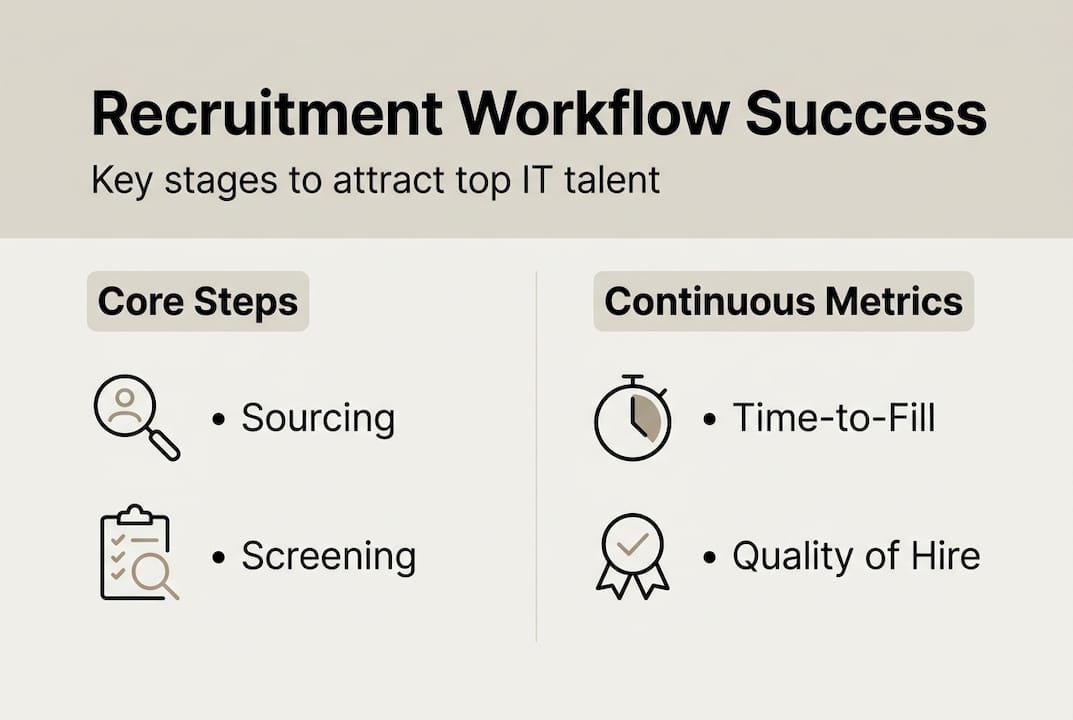
A structured workflow is your foundation. Define clear stages: sourcing, screening, interviewing, offer, and onboarding. Each stage needs specific actions, responsible parties, and timeframes. For sourcing, decide whether you'll use job boards, LinkedIn, GitHub, referrals, or specialized platforms. For screening, establish whether you'll use resume reviews, phone screens, or automated assessments first. Interviewing should include technical evaluations, behavioral interviews, and team fit conversations.

Your tools make or break execution. An applicant tracking system is non-negotiable for tech recruiting at scale. Compare options based on features that matter for IT roles: integration with GitHub or Stack Overflow, customizable technical assessment modules, automated scheduling across time zones, and candidate communication workflows. Sourcing platforms help you find passive candidates who aren't actively job hunting but might be open to the right opportunity.
| Tool Category | Key Features for Tech Recruiting | Popular Options |
|---|---|---|
| Applicant Tracking System | Resume parsing, pipeline management, compliance tracking | Greenhouse, Lever, Workable |
| Sourcing Platforms | Boolean search, talent pools, candidate engagement | LinkedIn Recruiter, GitHub Jobs, Stack Overflow |
| Assessment Tools | Coding challenges, technical skills tests, automated scoring | HackerRank, Codility, TestGorilla |
| Communication Tools | Email templates, scheduling automation, video interviewing | Calendly, Zoom, Microsoft Teams |
| Analytics Platforms | Recruitment metrics, pipeline reports, diversity tracking | Tableau, Power BI, built-in ATS analytics |
Structured workflows combined with ATS and sourcing tools improve recruitment outcomes. Before launching your optimized process, prepare these essentials:
- Write clear, specific job descriptions that list required technical skills, preferred frameworks, and actual day-to-day responsibilities
- Create candidate personas for each role type to guide sourcing and screening decisions
- Develop interview rubrics with standardized questions and scoring criteria for consistency
- Build email templates for common communications to maintain speed without sacrificing personalization
- Set up integrations between your ATS, calendar, and communication tools to eliminate manual data entry
Pro Tip: Automate routine communications to save recruiter time. Set up triggered emails for application confirmations, interview reminders, and status updates. This keeps candidates informed without requiring manual effort, freeing you to focus on relationship-building conversations. Visit tech recruitment platforms to explore tools that integrate seamlessly with your existing systems.
Execute the recruitment process step-by-step for IT roles
Execution is where preparation pays off. Follow these steps to run your optimized workflow effectively.
-
Source strategically for global tech talent. Don't just post and pray. Use multiple channels simultaneously. Post on specialized tech job boards, search LinkedIn and GitHub for passive candidates with specific skills, activate your employee referral program with clear incentives, and engage with developer communities on Reddit or Discord. Tailor your outreach messages to each candidate's background and interests.
-
Screen resumes and assess skills efficiently. Use your ATS to filter applications based on must-have technical skills and experience levels. For promising candidates, send a brief technical assessment or coding challenge before scheduling interviews. This pre-screening saves everyone time by ensuring candidates can actually do the work before you invest in lengthy interview processes.
-
Conduct structured technical interviews with clear evaluation criteria. Use your interview rubrics consistently. Have different interviewers assess different competencies: one focuses on coding ability, another on system design thinking, another on problem-solving approach. Coordinate interviews within a tight timeframe, ideally completing all rounds within one week to maintain candidate interest and momentum.
-
Engage candidates with transparent, timely communication. Respond to applications within 48 hours. Provide clear timelines for next steps after each interview. Share honest feedback when possible. Remember, even rejected candidates talk about their experience and influence your employer brand. Treat everyone with respect and professionalism.
-
Extend offers promptly and onboard effectively. When you find the right candidate, move fast. Prepare offer letters in advance so you can send them within 24 hours of the final decision. During onboarding, assign a buddy from the tech team, provide clear documentation about systems and processes, and schedule regular check-ins during the first 90 days.
Stepwise recruitment improves candidate experience and hiring manager satisfaction. Avoid these common pitfalls during execution:
- Asking irrelevant brain teasers instead of job-related technical problems
- Scheduling interviews too far apart, causing candidates to lose interest or accept other offers
- Failing to prepare interviewers, leading to inconsistent evaluations and poor candidate experience
- Ghosting candidates after interviews instead of providing timely updates
- Making lowball offers that insult qualified candidates and damage your reputation
Your execution quality directly impacts your ability to close top talent. Candidates evaluate you just as much as you evaluate them. A smooth, respectful process signals that your organization values people and runs efficiently. When you're finding tech candidates, remember that the best ones have multiple options and will choose employers who demonstrate professionalism throughout the hiring journey.
Verify and improve your recruitment workflow continuously
Optimization isn't a one-time project. It's an ongoing practice. Track key performance indicators weekly and monthly. Time-to-fill measures how long it takes from opening a requisition to accepting an offer. Quality of hire assesses new employee performance, cultural fit, and retention after six and twelve months. Candidate satisfaction captures how applicants rate their experience through post-interview surveys.
| Tracking Method | Advantages | Disadvantages |
|---|---|---|
| Manual spreadsheets | Low cost, full customization, no learning curve | Time-consuming, error-prone, limited analysis capabilities |
| ATS built-in analytics | Automated data collection, real-time dashboards, easy access | May lack advanced features, limited customization, vendor lock-in |
| Dedicated analytics platforms | Sophisticated reporting, predictive insights, cross-system integration | Higher cost, implementation complexity, requires training |
Solicit feedback from everyone involved. Send surveys to candidates after they complete your process, whether hired or not. Ask specific questions: Was the timeline clear? Did interviewers seem prepared? Was communication timely? For hiring managers, schedule quarterly reviews to discuss what's working and what needs adjustment. Your recruiters should also share observations about bottlenecks or friction points they encounter.
Continuous workflow assessment leads to better hiring metrics and reduces turnover. Address common workflow errors proactively:
- Inconsistent interview questions across candidates make fair comparisons impossible
- Lack of documentation about why candidates were rejected creates compliance risks
- Overloaded recruiters managing too many open positions simultaneously reduce quality
- Outdated job descriptions that don't reflect actual role requirements attract wrong candidates
- Missing feedback loops between recruiters and hiring managers cause misalignment
"The best recruitment workflows evolve based on data and feedback. Set quarterly improvement cycles where you analyze metrics, identify the biggest pain point, implement a targeted change, and measure the impact. Small, iterative improvements compound into significant competitive advantages over time."
Use your data to inform decisions. If you notice candidates dropping out after the technical assessment, maybe it's too long or too difficult. If hiring managers consistently rate new hires poorly in their first performance reviews, revisit your interview criteria and assessment methods. When time-to-fill increases, investigate whether it's due to market conditions, internal delays, or process inefficiencies. Stay informed about tech job market insights to contextualize your metrics against industry benchmarks.
Streamline your tech recruitment with Let's Hunt
You've learned how to optimize your recruitment workflow independently. Now amplify your results with Let's Hunt. Our platform is designed specifically for tech recruiters who need to source, engage, and hire IT talent efficiently. Let's Hunt offers advanced search filters to find candidates with precise technical skills, global reach to access talent across regions and time zones, and seamless integration with your existing recruitment tools.
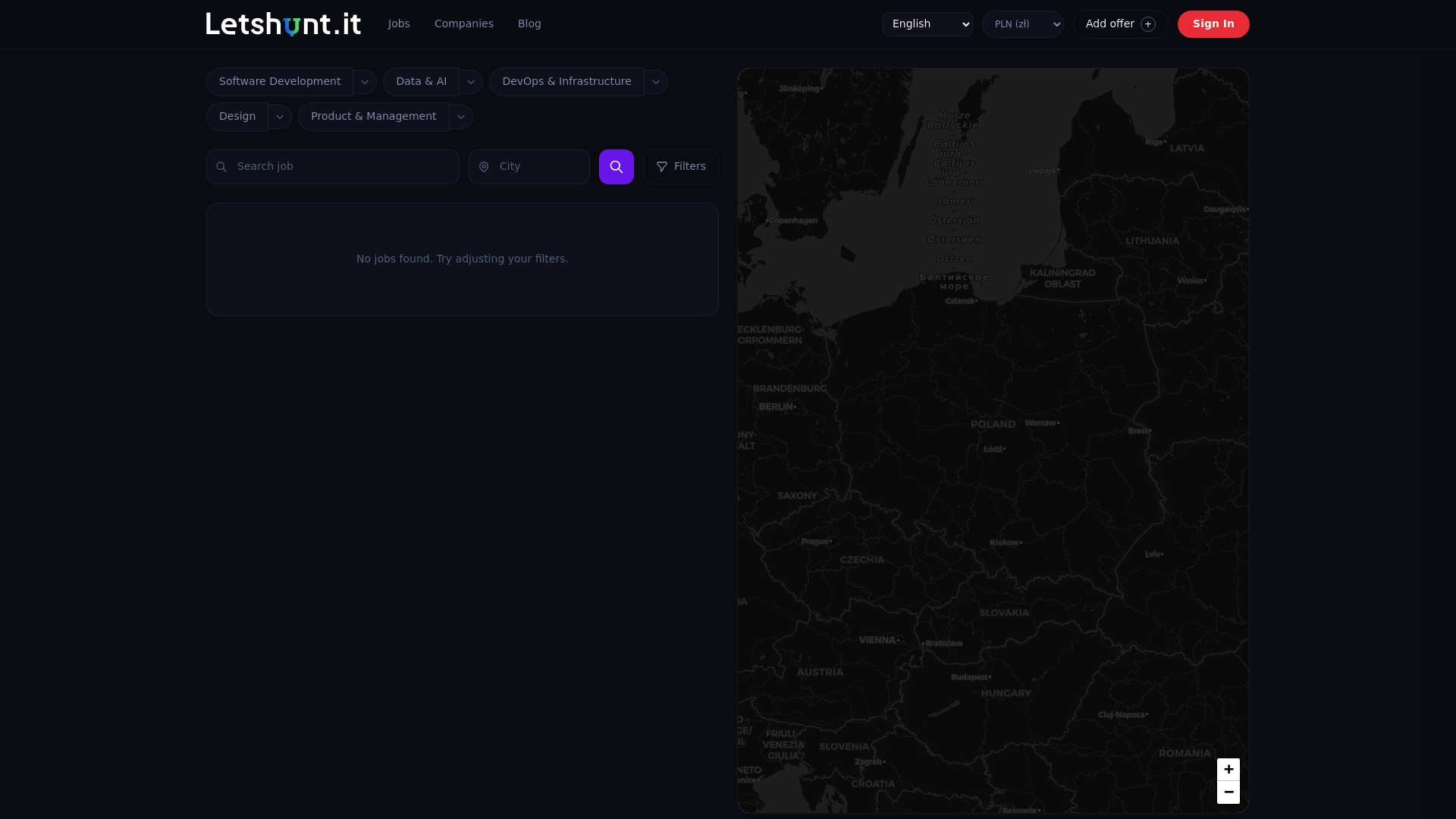
Faster candidate sourcing means shorter hiring cycles. Our database focuses exclusively on technology professionals, so you're not wading through irrelevant profiles. Better communication tools keep candidates engaged throughout your process. When you explore tech job listings on our platform, you're connecting with active job seekers and passive candidates who are open to the right opportunity. Let's Hunt supports your optimized workflow by removing friction from sourcing and outreach, letting you focus on relationship-building and evaluation. Access top IT talent and transform your recruitment outcomes.
Frequently asked questions
How long does an optimized tech recruitment workflow take?
Typical optimized workflows reduce hiring cycles from months to weeks. Most tech roles can be filled in 30 to 45 days with a well-structured process, compared to 60 to 90 days with traditional approaches. Time varies by role seniority and geographic reach. Senior positions or highly specialized skills may require longer sourcing periods, while junior roles with clear requirements can move faster.
What are the best tools to use in tech recruitment workflows?
Applicant tracking systems and sourcing platforms are essential for managing tech recruitment at scale. Look for tools with automation features like resume parsing, interview scheduling, and candidate communication workflows. Integration capabilities matter too. Your tools should connect with GitHub, LinkedIn, Slack, and your existing HR systems. Assessment platforms that offer coding challenges and technical skill tests help you evaluate candidates objectively before investing time in interviews.
How do I attract global tech talent effectively?
Use specialized global sourcing channels and strong employer branding to reach international candidates. Highlight remote work options, competitive compensation, and growth opportunities in your job postings. Maintain clear communication about visa sponsorship, relocation support, and time zone expectations upfront. Flexible interview scheduling across time zones shows respect for candidates' circumstances. Showcase your company culture through employee testimonials, tech blog posts, and open-source contributions to build credibility with global talent.
What metrics should I track to measure recruitment workflow success?
Track time-to-fill to measure process speed, quality of hire to assess candidate fit and performance, and candidate satisfaction to evaluate experience. Also monitor cost-per-hire to ensure efficiency, offer acceptance rate to gauge competitiveness, and source effectiveness to identify which channels deliver the best candidates. Diversity metrics help ensure your workflow promotes inclusive hiring. Review these metrics monthly and compare them against your established goals and industry benchmarks.
How can I improve candidate experience in tech recruitment?
Provide transparent communication at every stage, from application acknowledgment to final decisions. Set clear expectations about timeline, interview format, and evaluation criteria upfront. Prepare your interviewers with specific questions and evaluation rubrics so conversations feel purposeful. Offer timely feedback, even to rejected candidates when possible. Respect candidates' time by consolidating interviews, providing take-home assignments with reasonable time limits, and responding to questions promptly. A positive experience turns rejected candidates into future applicants and brand advocates.