
TL;DR:
- Automated applicant tracking systems reject 75% of resumes before reaching recruiters.
- Tailoring resumes with relevant keywords and quantifiable achievements improves application success.
- Building a strong online presence and targeted networking increases chances of landing IT roles.
Automated screening tools now filter out most applicants before a human ever reads a single line of their resume. 75% of resumes never reach a recruiter's desk, which means the advice your college career center gave you is almost certainly outdated. The IT job market is competitive, global, and increasingly skills-first, so generic applications simply don't survive. This article walks you through exactly how employers evaluate candidates, how to tailor your materials, which certifications and portfolios move the needle, and how to navigate AI-driven interviews with confidence.
Table of Contents
- Understand job search criteria in tech
- Tailor your resume and cover letter for every IT job
- Leverage tech skills, certifications, and portfolios
- Master the digital application and interview process
- What most IT job seekers miss about landing tech roles
- Accelerate your IT job search with expert resources
- Frequently asked questions
Key Takeaways
| Point | Details |
|---|---|
| Tailor every application | Personalize resumes with keywords and metrics for each tech job. |
| Highlight certifications | Show off reputable tech certifications and projects on your resume. |
| Apply early | Early applications boost your chance of getting noticed. |
| Prepare for AI screening | Structure your materials for automated filters and show your problem-solving skills. |
| Use portfolios | GitHub and project portfolios give evidence of skill beyond credentials. |
Understand job search criteria in tech
Before you send a single application, you need to understand the filters standing between you and an interview. Most large tech companies route every resume through an Applicant Tracking System, or ATS. These tools scan for specific keywords, formatting patterns, and measurable achievements before a recruiter ever sees your name.
According to CompTIA job search advice, ATS rejects 75% of resumes before they reach a hiring manager. The fix is not to game the system. It is to understand what the system is looking for and give it exactly that: clean formatting, standard section headings like "Work Experience" and "Skills," and keywords pulled directly from the job posting.
Here is what IT employers consistently prioritize:
- Exact keyword matches from the job description, including specific tools, languages, and frameworks
- Quantifiable achievements, such as "reduced deployment time by 40%" rather than "improved deployment"
- Relevant certifications that signal verified, current knowledge
- Application timing, since early applicants are far more likely to get noticed
- Clean, ATS-readable formatting with no graphics, tables embedded in headers, or unusual fonts
The skills-first hiring trend is reshaping how companies evaluate candidates. Employers increasingly care less about where you went to school and more about what you can actually do. Platforms focused on optimizing tech recruitment reflect this shift, with job listings that emphasize specific technical competencies over traditional credentials.
"Tailor resumes and applications for each job; generic applications fail ATS and recruiters alike."
Pro Tip: Read the job description three times before writing a single word of your resume. Highlight every technical skill and tool mentioned. Those are your target keywords.
Understanding IT job board insights also helps you see patterns across postings. When you notice the same five skills appearing in every DevOps listing, that tells you exactly where to focus your learning and your resume real estate.
Tailor your resume and cover letter for every IT job
Now that you know what counts, here is exactly how to tailor your materials. The average job posting attracts around 250 applications. Early applicants convert 2.5x better than those who apply days later, so speed combined with precision is your biggest advantage.
Tailoring is not about rewriting your entire resume from scratch every time. It is about making strategic adjustments that align your experience with the specific language of each posting. Follow this process:
- Copy the job description into a text document and highlight every skill, tool, and responsibility mentioned.
- Mirror that language in your resume bullets. If the job says "CI/CD pipelines," your resume should say "CI/CD pipelines," not "continuous integration workflows."
- Lead with a summary statement that speaks directly to the role. Two to three sentences that position you as the exact person they described.
- Quantify everything you can. "Managed cloud infrastructure" becomes "managed AWS infrastructure supporting 2 million monthly active users."
- Customize your cover letter opening. Reference the company's actual product, challenge, or recent news. Generic openers get skipped.
- Remove irrelevant experience. A ten-year-old help desk role does not belong on a senior cloud architect application unless it directly supports your narrative.
"Generic resumes fail both ATS filters and human reviewers. Personalization is not optional; it is the baseline."
Pro Tip: Keep a master resume with every role, project, and achievement you have ever had. Then pull from it selectively for each application. This saves time while keeping every submission sharp and relevant.
For roles in creative or hybrid tech fields, understanding how to approach customizing resumes for tech design and product positions requires a slightly different emphasis on visual portfolio links and cross-functional collaboration. If you are targeting distributed teams, remote IT job strategies add another layer: highlight your async communication skills and remote tooling experience explicitly.
Leverage tech skills, certifications, and portfolios
Once your resume is tailored, it is time to boost your value with certifications and projects. The shift to skills-first hiring means that a well-chosen certification can open doors that a four-year degree alone cannot. Certifications from CompTIA and AWS consistently outperform generic credentials for many technical roles.
Here are the certifications that carry the most weight across common IT job categories:
- CompTIA Security+ for cybersecurity and IT support roles
- AWS Certified Solutions Architect for cloud and infrastructure positions
- Google Professional Data Engineer for data and AI careers
- Certified Kubernetes Administrator (CKA) for DevOps and platform engineering
- Microsoft Azure Administrator for enterprise infrastructure roles
| Credential type | Hiring weight | Time to earn | Cost range |
|---|---|---|---|
| University degree | Moderate | 2 to 4 years | High |
| Industry certification | High | 1 to 6 months | Low to moderate |
| GitHub portfolio | Very high | Ongoing | Free |
| Open source contributions | High | Ongoing | Free |
Your GitHub profile is often the first thing a technical recruiter checks after your resume. A clean, well-documented repository with real projects tells a hiring manager far more than a bullet point ever could. Pin your best three to five repositories, write clear README files, and commit consistently.

Pro Tip: Contribute to one open source project in your target stack. Even small, well-documented pull requests signal initiative, collaboration skills, and real-world coding ability to technical interviewers.
Exploring top software career paths helps you identify which certifications align with your long-term trajectory. For infrastructure and automation specialists, reviewing DevOps job options reveals exactly which credentials employers list most often. Using tech job board benefits to analyze job postings at scale gives you a data-driven view of what the market actually rewards.
Master the digital application and interview process
The final step: making your digital application stick and navigating the interview stage. The process has changed significantly. AI screening is used in 83% of companies, which means your application must satisfy both an algorithm and a human. These are not the same thing, and you need to prepare for both.
Here is how to move through the process with confidence:
- Submit a tailored application within 24 to 48 hours of a posting going live. Early timing matters more than most candidates realize.
- Prepare for an async video screen. Many companies now use recorded video questions as a first filter. Practice your answers out loud before recording.
- Research the company's tech stack. Mention specific tools they use in your interview answers. This signals genuine interest and preparation.
- Lead with unique stories. AI screening tools and human interviewers both respond to concrete, specific examples. "I led a team of four engineers to migrate a monolith to microservices in 90 days" beats "I have leadership experience."
- Follow up within 24 hours of every interview with a brief, specific thank-you note that references something from the conversation.
| Stage | Average duration | Key success factor |
|---|---|---|
| Application to screen | 3 to 7 days | ATS keyword match |
| Recruiter screen | 1 to 2 weeks | Clear communication |
| Technical interview | 1 to 2 weeks | Depth and problem-solving |
| Final round | 1 to 2 weeks | Culture fit and leadership |
| Total time to hire | 41 to 44 days | Consistency throughout |
Pro Tip: Before any technical interview, revisit the job description and prepare one specific story for each core responsibility listed. Use the STAR format: Situation, Task, Action, Result.
For distributed roles, remote tech job strategies cover the nuances of async hiring processes in detail. If you are exploring niche platforms, alternative tech job sites can surface opportunities that mainstream boards miss entirely.
What most IT job seekers miss about landing tech roles
Here is the candid truth from industry insiders: mass applying does not work in tech. Sending 200 generic applications produces worse results than sending 20 targeted, well-researched ones. The math feels counterintuitive, but the data and the hiring managers agree.
The candidates who land roles fastest are not the ones with the longest resumes. They are the ones who have made themselves findable, credible, and specific. A strong LinkedIn profile with recommendations from former colleagues. A GitHub with active, documented projects. A clear professional narrative that connects past roles to the target position.
Networking still matters, and not in a forced, transactional way. A brief, genuine message to an engineer at a company you admire, asking one specific question about their work, opens more doors than a cold application ever will. The IT market rewards people who are visibly engaged in their field, not just quietly applying.
Strategic positioning beats volume every time. Focus on tech recruitment insights to understand what hiring teams actually prioritize, and build your presence around those signals. Be the candidate who is easy to say yes to.
Accelerate your IT job search with expert resources
Ready to take your IT job search to the next level? The strategies above work best when paired with the right platform. LetsHunt.it is built specifically for IT professionals who want to find remote, hybrid, and on-site roles across software development, data and AI, DevOps, infrastructure, design, and product management.
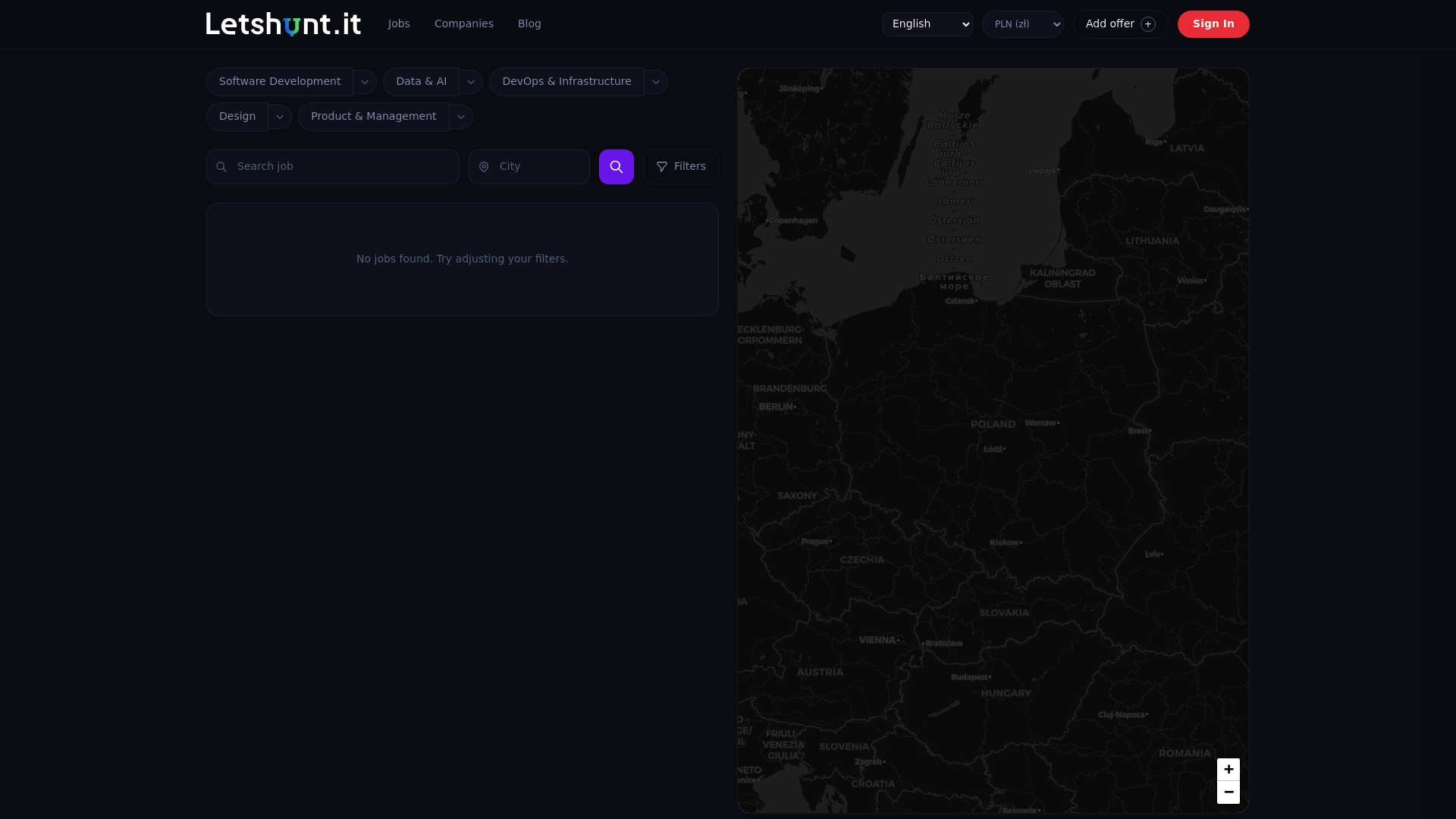
The platform's filters let you search by role type, location, salary range, and work model, so you spend less time scrolling and more time applying to positions that actually fit. Whether you are a senior engineer targeting global remote roles or a junior developer looking for your first professional position, browse IT jobs on LetsHunt.it to find curated opportunities matched to your skills and career goals. Start your search today and put these strategies into action.
Frequently asked questions
How can I optimize my resume for ATS in IT job searches?
Use a clean format with standard section headings and match keywords directly from the job description. ATS rejects 75% of resumes before a recruiter sees them, so precision with language and formatting is critical.
Are certifications more important than degrees for IT jobs?
For many technical roles, certifications and real-world projects carry more weight than a traditional degree. Skills-first hiring means employers increasingly prioritize what you can do over where you studied.
How early should I apply to IT jobs?
Apply within 24 to 48 hours of a job posting going live. Early applicants convert 2.5x better than those who apply later in the posting cycle.
How long does the IT hiring process usually take?
The tech hiring timeline typically runs 41 to 44 days from application to offer, so consistent follow-up and patience throughout each stage are essential.
How do I stand out in interviews processed by AI screening?
Focus on specific, human stories that highlight leadership and unique outcomes. AI screening at 83% of companies means the candidates who advance are those who balance keyword optimization with genuine, memorable narratives.