
TL;DR:
- Developer roles are categorized by technical layer, expertise, and application domain for clarity.
- Specializations like AI, DevOps, and Security offer higher salaries and growth prospects.
- Understanding role fit helps prevent burnout, guides targeted career moves, and increases job market success.
Choosing a path in software development sounds exciting until you realize there are dozens of specializations staring back at you. Front-end, back-end, DevOps, ML engineer, blockchain developer — the list keeps growing. Most developers waste months chasing roles that don't match their strengths simply because they never stopped to map the landscape. This guide cuts through that noise. You'll get a clear breakdown of the main types of software developers, what each role actually does day-to-day, which specializations pay the most, and a practical framework to figure out where you belong. Whether you're just starting out or considering a pivot, this is the clarity you need.
Table of Contents
- How to categorize software developer roles
- Core developer roles and what they do
- Advanced and specialized developer types
- Comparing developer roles: which is right for you?
- Why understanding developer types is your career cheat code
- Take your next career step in software development
- Frequently asked questions
Key Takeaways
| Point | Details |
|---|---|
| Role clarity matters | Knowing the main types of software developers helps you target your training and job search effectively. |
| Industry drives demand | Sectors like AI, security, and DevOps are growing fastest and offer top salaries if you focus your skills. |
| Core vs. specialized roles | Generalist roles offer flexibility while specialized developer types typically earn higher compensation and faster growth. |
| Switching is common | Many developers change specializations, making career agility a valuable trait. |
How to categorize software developer roles
With the need for clarity established, let's break down how software developer roles are grouped and what defines them.
Software developer roles are not random. They follow a logic built around three organizing principles: technical layer (where in the stack you operate), area of expertise (what specific discipline you master), and application domain (what industry or product type you build for). Once you understand these three axes, any new role title becomes much easier to decode.
The developer roles overview broadly breaks down into these core groups:
- Front-End Developer — Builds user-facing interfaces for web and apps
- Back-End Developer — Manages servers, databases, and APIs
- Full-Stack Developer — Works across front and back end
- Mobile Developer — Builds iOS and Android applications
- DevOps / Site Reliability Engineer (SRE) — Automates infrastructure and maintains system reliability
- Data Engineer / ML Engineer — Builds data pipelines and machine learning systems
- Security Engineer — Protects systems from vulnerabilities and threats
- QA / Software Development Engineer in Test (SDET) — Designs and runs automated testing
- Specialized Engineers — Game, Embedded, Blockchain, IoT, and more
Common developer types span all these categories, each with distinct responsibilities and required skill sets.
Industry context also drives demand. A fintech company prizes back-end and security engineers. A gaming studio hunts for graphics and game developers. Knowing the domain matters as much as knowing the tech stack.
Pro Tip: Before you specialize, ask yourself one honest question: Do I love what users see, how systems run, or how data moves? That answer points directly to a category.
Core developer roles and what they do
Now that we have the categories, let's dig into what each core developer role does and where they shine.

Front-end, back-end, and full-stack developers each own a distinct layer of a product. Here's a closer look:
Front-End Developer
- Builds what users see and interact with
- Core tools: HTML, CSS, JavaScript, React, Angular
- Strengths: Visual thinking, rapid feedback loops, direct user impact
- Work style: Collaborative with designers and product managers
Back-End Developer
- Powers the logic, databases, and integrations behind the scenes
- Core tools: Python, Java, Node.js, PostgreSQL, REST/GraphQL APIs
- Strengths: System architecture, data integrity, security
- Work style: Deep focus, often working closely with DevOps teams
Full-Stack Developer
- Handles both front-end and back-end layers
- Core tools: Combines skills from both disciplines
- Strengths: Versatility, full product ownership
- Work style: High adaptability, valued in software development across startups and scale-ups
Mobile Developer
- Builds native or cross-platform apps for iOS and Android
- Core tools: Swift, Kotlin, React Native, Flutter
- Strengths: Platform-specific optimization, offline functionality
- Work style: Tight release cycles, heavy testing requirements
Here's a quick comparison to help you visualize the differences:
| Role | Primary focus | Core tech | Avg. US salary range |
|---|---|---|---|
| Front-End | UI/UX implementation | React, JS, CSS | $95k – $145k |
| Back-End | APIs, databases, logic | Python, Java, Node.js | $140k – $175k |
| Full-Stack | End-to-end features | Varies | $120k – $160k |
| Mobile | iOS/Android apps | Swift, Kotlin, Flutter | $110k – $160k |
You can explore software careers in more depth to see how these paths progress over time.
Pro Tip: Full-stack roles are gold for startups. If you want variety, ownership, and a fast learning curve early in your career, full-stack is one of the smartest entry points.
Advanced and specialized developer types
Beyond the core, some developer roles are leading the industry with advanced expertise or niche technical skills.
These roles command the highest salaries and sit at the frontier of what's possible in software. If you want to build something cutting-edge or secure a role that's genuinely hard to fill, these are your options.
DevOps / SRE Engineer
- Automates infrastructure, manages CI/CD pipelines, and ensures system reliability
- Core tools: Docker, Kubernetes, Terraform, Jenkins
- DevOps engineering roles blend software development with operations for maximum system uptime
Security Engineer
- Identifies vulnerabilities, builds defenses, and responds to threats across the entire stack
- Works across every layer — front-end, back-end, and infrastructure
- High demand in regulated industries like finance, healthcare, and government
Data Engineer / ML Engineer
- Builds data pipelines, trains machine learning models, and creates recommendation systems
- Core tools: Apache Spark, Python, TensorFlow, PyTorch, SQL
- AI and ML jobs have seen explosive hiring growth over the past three years
QA / SDET
- Designs automated test frameworks that catch bugs before they reach users
- Critical for product quality and release confidence
- Core tools: Selenium, Cypress, Pytest, Jenkins
Emerging specialized roles:
- Game Developer — Physics engines, gameplay systems, real-time rendering
- Embedded Engineer — Firmware and hardware-level software for devices
- Blockchain Developer — Smart contracts, decentralized protocols
- IoT Engineer — Connecting physical devices to cloud platforms
Salary snapshot: ML engineers earn $119k to $185k annually in the US, while DevOps/SRE roles land between $160k and $165k, and back-end roles sit at $140k to $175k.
Specialization in AI/ML, DevOps, and Security consistently yields the highest salaries and fastest career growth, while full-stack generalists offer flexibility with lower salary ceilings.
Comparing developer roles: which is right for you?
If you're deciding your next step or planning a pivot, see how the types compare on real career factors.
| Role | Work style | Salary range (US) | Best for |
|---|---|---|---|
| Front-End | Collaborative, visual | $95k – $145k | Creative problem-solvers |
| Back-End | Deep focus, systematic | $140k – $175k | Logic-driven builders |
| Full-Stack | Versatile, fast-paced | $120k – $160k | Generalists, startup fans |
| Mobile | Platform-focused | $110k – $160k | App-first thinkers |
| DevOps/SRE | Process-oriented | $160k – $165k | Systems reliability fans |
| ML/AI Engineer | Research-heavy | $119k – $185k | Data and math lovers |
| Security Engineer | Risk-focused | $130k – $170k | Analytical, detail-oriented |
Use this numbered process to assess your personal fit:
- Identify your interest zone. Do you prefer building interfaces, managing data, automating systems, or securing infrastructure?
- Assess your learning style. Visual learners often gravitate toward front-end. Abstract thinkers tend to thrive in back-end or ML roles.
- Evaluate your collaboration needs. Front-end and mobile roles involve frequent interaction with designers and PMs. DevOps and security roles are more independent.
- Research industry demand. Check which roles dominate hiring in the sectors you want to work in, then find your perfect IT job within that space.
- Test before committing. Build small projects in two or three areas before locking in a specialization.
"The fastest growing opportunities in software right now sit at the intersection of AI, cloud reliability, and security. Developers who can operate in those zones are essentially writing their own ticket."
The US Bureau of Labor Statistics projects 17% growth for software developers through 2033, with roughly 140,000 new openings per year. You can also review engineering career comparisons to benchmark these paths further. For deeper guidance, explore developer career growth strategies that work across specializations.
Why understanding developer types is your career cheat code
Having compared the roles, let's step back and consider how strategic understanding can supercharge your tech journey.
Here's the uncomfortable truth most career content skips: the majority of developer frustration doesn't come from missing technical skills. It comes from unclear role fit. Developers burn out not because they can't code, but because they're stuck in roles that don't match their working style, interests, or values.
When you understand the types, something powerful shifts. You stop applying randomly and start targeting with precision. You negotiate with confidence because you know what your specialization is worth. You can spot a bad role before you accept it.
The conventional wisdom says: pick a lane and stay there. Reality says something different. Switching between developer types is increasingly common, and it often accelerates rather than derails careers. A back-end developer who moves into ML brings a systems-thinking perspective that pure data scientists often lack. A front-end developer who shifts into mobile already understands UX deeply.
Pro Tip: Don't just map your skills to a role. Map your values to a role. Do you want creative freedom? Operational impact? Research depth? Those answers should drive your direction as much as what you already know how to do.
Knowing the map of software job clarity means you can move with intention, no matter how the industry shifts. And in tech, the industry always shifts.
Take your next career step in software development
With your direction in focus, here's how to turn your new understanding into real career action.
Now that you can distinguish front-end from full-stack, DevOps from data engineering, and QA from security, you have something most job seekers lack: clarity. That clarity is a real competitive advantage in a crowded market.
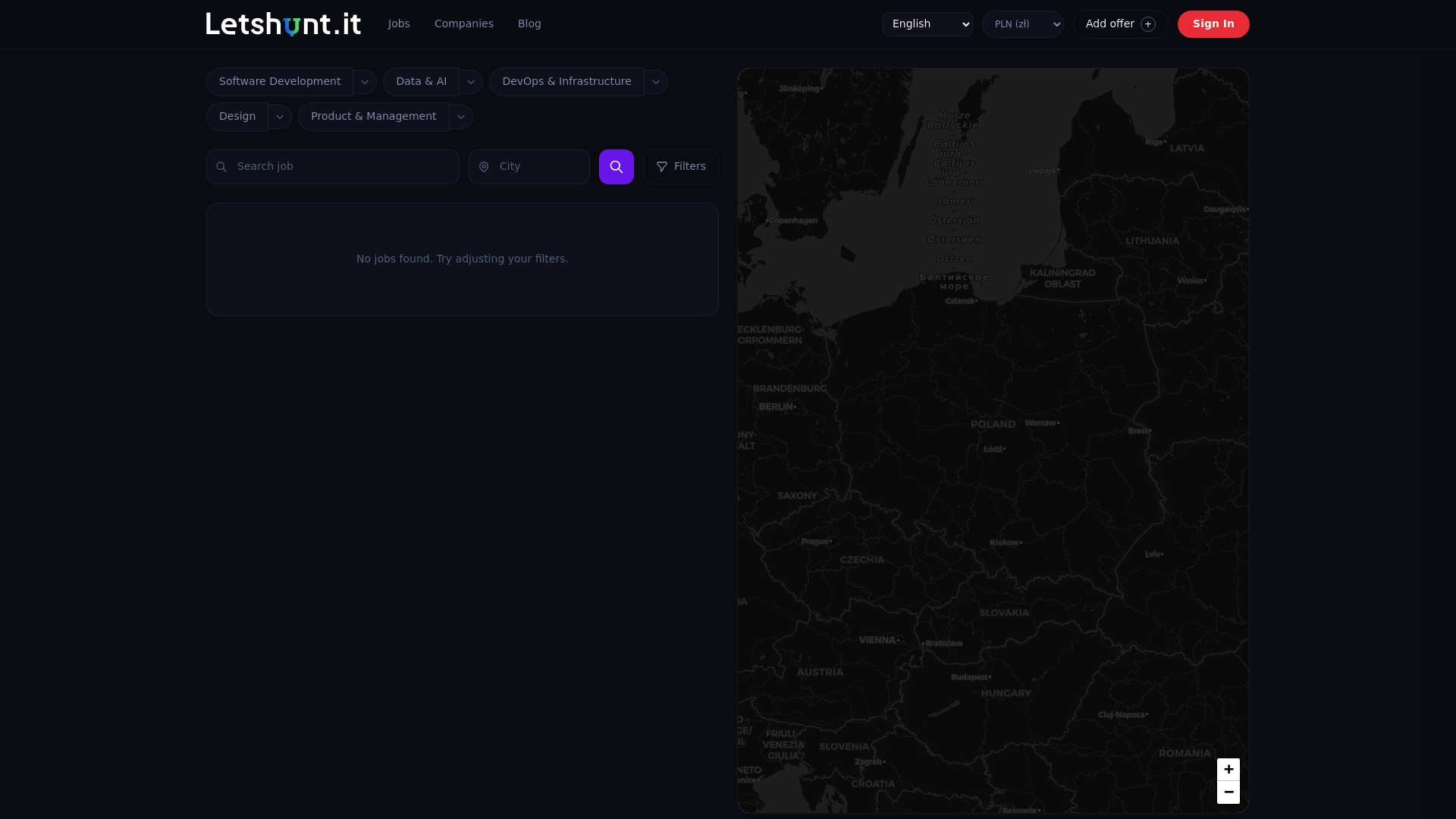
LetsHunt.it is built for exactly this moment. Browse curated software developer jobs filtered by role type, location, and work arrangement — remote, hybrid, or on-site. Whether you're targeting your first ML role or looking to pivot into DevOps, LetsHunt.it connects you with vetted opportunities across the global tech market. Use your new knowledge to filter smarter, apply with confidence, and land the role that actually fits.
Frequently asked questions
What are the fastest growing types of software developers?
AI/ML, DevOps, and Security engineering roles are among the fastest growing in 2026, offering both high salaries and long-term demand across industries.
Which developer roles are best for beginners?
Front-end, back-end, and full-stack roles are the most accessible entry points, with abundant learning resources, bootcamp support, and consistent hiring demand.
How do I pick the right software developer specialization?
Match your interests — whether that's user experience, data systems, or infrastructure — to the core responsibilities of each role type, then validate your choice against market demand.
Can I switch between developer types during my career?
Absolutely. Many developers move between specializations as their interests evolve, and cross-type experience often accelerates promotions and salary growth.
Are specialized developer types paid more than generalists?
Yes. Roles like ML Engineer, DevOps/SRE, and Security Engineer command salaries of $119k to $185k in the US, significantly above typical full-stack compensation.