
TL;DR:
- Modern IT job portals offer advanced filtering, AI matching, and remote-first role visibility.
- AI-driven tools improve job matching but raise privacy concerns and may filter non-traditional candidates.
- Online presence and social media reputation significantly influence employer perception during job searches.
Finding the right tech job across borders is genuinely overwhelming, even for seasoned engineers. Thousands of listings, dozens of platforms, and a flood of automated rejections make the process feel like shouting into a void. A job portal is an online platform that connects job seekers with employers by allowing posting, searching, and managing job listings, resumes, and applications. For IT professionals, the right portal does far more than list openings. It filters by stack, matches by skill level, and surfaces remote-first roles from companies you'd actually want to work for. This guide breaks down what job portals are, how AI is reshaping them, and how to use them strategically to land competitive global tech roles.
Table of Contents
- What is a job portal? Core functions explained
- Major tech job portals: A global comparison
- How AI transforms IT recruitment on job portals
- Beyond the basics: Analytics, privacy, and candidate reputation
- Why the evolution of job portals is a mixed blessing for IT professionals
- Advance your IT career with the right job portal
- Frequently asked questions
Key Takeaways
| Point | Details |
|---|---|
| Job portals connect IT talent | Modern job portals match software developers, data scientists, and product managers with relevant global employers using advanced filtering. |
| AI boosts hiring success | AI-powered matching and interviews can significantly improve application outcomes for tech professionals. |
| Privacy matters | Engineers and data experts should stay aware of data privacy risks as portals adopt AI. |
| Choose purpose-built platforms | Tech-focused job portals offer unique filters, analytics, and opportunities not found on general job sites. |
| Reputation impacts outcomes | Maintaining a strong professional and social media presence is essential for positive employer perceptions on job portals. |
What is a job portal? Core functions explained
At its core, a job portal is a digital marketplace where supply meets demand in the labor market. Job seekers upload resumes and browse listings. Employers post roles and review applicants. A backend admin layer manages compliance, data integrity, and platform rules. That three-panel architecture is standard, but what separates a great portal from a mediocre one is what happens in between.
For IT professionals, generic job sites fall short fast. A portal built for tech roles offers using job boards for tech roles that general platforms simply don't prioritize, like filtering by programming language, framework, years of experience in a specific tool, or clearance level for government contracts.
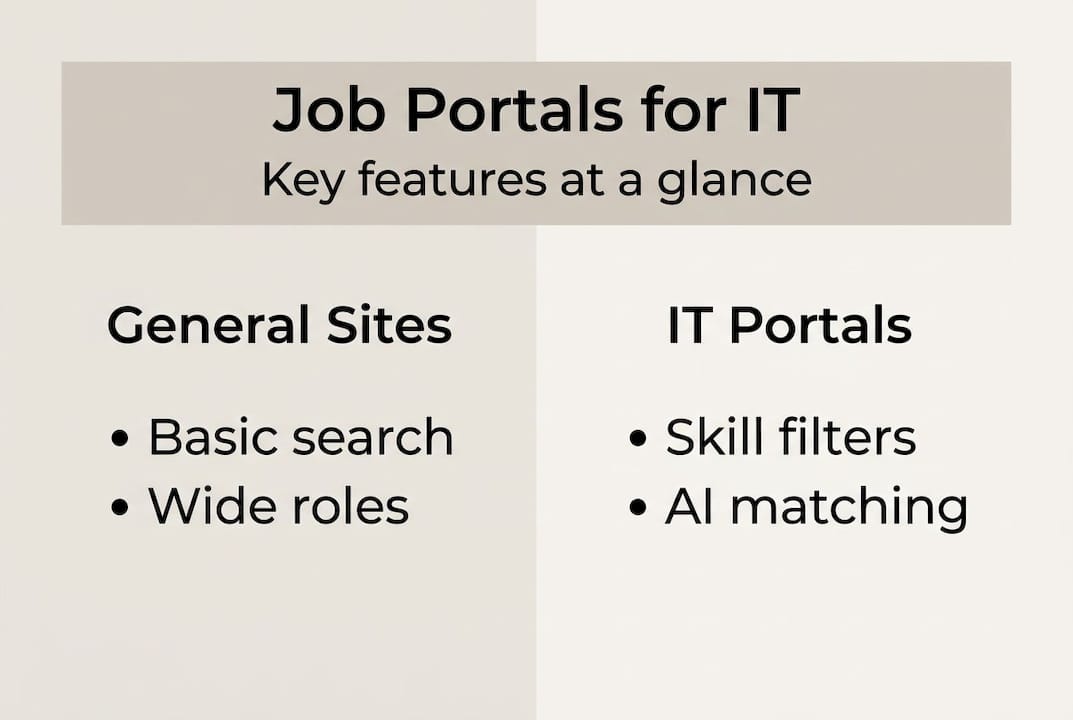
Modern portals are genuinely sophisticated. Job portal development mechanics include job posting, resume upload, search and filtering, application tracking, AI-driven matching, and analytics dashboards. That's a full product ecosystem, not just a bulletin board.
Here's what to look for when evaluating any tech-focused portal:
- Advanced skill filters: Search by Python, Kubernetes, or LLM experience, not just "software engineer"
- Remote and hybrid toggles: Essential for global job seekers
- Application tracking: See where you stand without emailing recruiters
- AI matching: Get surfaced to relevant employers automatically
- Salary transparency: Know the range before you apply
- Resume parsing: Auto-fill applications from your uploaded CV
Pro Tip: Don't just search by job title. Use skill-based filters and set up email alerts for specific tech stacks. Portals that support IT job boards explained let you narrow results to roles that actually match your depth of experience, not just your job title.
| Feature | General job sites | IT-specific portals |
|---|---|---|
| Tech skill filters | Basic or none | Deep, stack-level filtering |
| AI-driven matching | Limited | Core feature |
| Remote job focus | Mixed | Often default |
| Salary transparency | Inconsistent | Frequently required |
| Domain categories | Broad | DevOps, AI, infra, design |
| Resume parsing | Standard | Tech-optimized |
Major tech job portals: A global comparison
Once you understand what a portal can do, the next challenge is picking the right one. Not every platform serves every IT profile equally, and spreading yourself thin across ten sites is a waste of energy.
Top global portals for IT professionals include Dice, Stack Overflow Jobs, LinkedIn, Indeed, Built In, and Wellfound. Each has a distinct audience and a different value proposition.
Dice is built specifically for U.S.-based tech talent. It skews toward enterprise roles and government contracting, making it strong for experienced engineers in established industries. Stack Overflow Jobs (now integrated into broader developer community tools) targets developers who want to be found by companies that respect technical depth. LinkedIn is the global default, massive in reach but noisy in signal. Indeed aggregates listings from everywhere, which means volume but also inconsistency. Built In focuses on startup and tech company culture, great for engineers who want mission-driven work. Wellfound (formerly AngelList Talent) is the go-to for startup roles, especially early-stage companies offering equity.
Features that matter most for global tech mobility:
- Visa sponsorship filters
- Remote-first or remote-friendly tags
- Equity and compensation breakdowns
- Timezone flexibility indicators
- Company tech stack transparency
| Portal | Geographic focus | Tech-focus rating | Key feature |
|---|---|---|---|
| Dice | United States | Very high | Tech-only listings |
| Global | Medium | Network + recruiter reach | |
| Indeed | Global | Low to medium | Volume aggregation |
| Built In | United States | High | Startup culture fit |
| Wellfound | Global | High | Equity-first startup roles |
| Stack Overflow Jobs | Global | Very high | Developer community trust |
For developers exploring dev-task.com alternatives or justjoin.it alternatives, the comparison above helps you identify which platform fits your specialization, seniority, and geographic target.
How AI transforms IT recruitment on job portals
Knowing where to look is only half the battle. The mechanics behind modern portals are increasingly AI-driven, and understanding them gives you a real edge.

AI features now embedded in leading portals include recommender systems, automated resume screening, predictive matching, and even AI-powered video interviews. These tools work in the background to surface your profile to relevant employers and rank you against other applicants before a human ever sees your name.
The numbers are striking. AI matching in portals using recommender systems improves job finding by 1% for short-term contracts, and AI interviews boost hire rates by 20 percentage points. That second stat is significant. A 20-point lift in hiring rates means AI interviews aren't just a gimmick; they're changing who gets offers.
Here's how a typical AI-powered application flows:
- You upload a resume or connect your LinkedIn profile
- The portal's parser extracts skills, experience, and education
- A recommender engine matches your profile to open roles
- Your application is scored and ranked against other candidates
- If shortlisted, you may complete an AI video interview
- Human reviewers see a filtered, ranked candidate pool
Pro Tip: To benefit from recommender matching, keep your profile updated with specific technologies, not just job titles. "Senior engineer" tells the algorithm nothing. "Senior engineer, Go, gRPC, Kubernetes, GCP" tells it everything. Also explore optimizing tech recruitment with AI to understand how employers use these same tools on their end.
That said, the IT community has real concerns here. Engineering candidates wary of AI using personal data report reduced organizational attractiveness toward companies that rely heavily on automated screening. If a company's entire process is a black box, that's worth noting. For more on AI interview growth trends and how to prepare, the landscape is shifting fast. Strong candidates also invest in tech job search optimization to stay ahead of algorithmic filtering.
Beyond the basics: Analytics, privacy, and candidate reputation
Advanced automation is only part of what modern portals offer. There's an entire layer around analytics and personal data that most candidates ignore, often to their detriment.
For job seekers, portal analytics show you which employers viewed your profile, how your application ranks relative to others, and which skills are most in demand in your target market. For hiring managers, dashboards reveal time-to-fill rates, source quality, and candidate pipeline health. Both sides are working with data, and the candidates who understand this dynamic use it to their advantage.
Privacy settings matter more than most IT professionals realize. Key considerations include:
- Profile visibility controls: Decide who can see your resume, open-to-work status, and contact info
- Data retention policies: Know how long portals store your application history
- Third-party data sharing: Some portals sell anonymized data to analytics firms
- AI consent settings: Opt in or out of AI-driven matching and screening
- Social profile linking: Connecting LinkedIn or GitHub adds context but also exposure
Reputation management is now a real part of the job search. Tools for data job candidates increasingly include guidance on how your public presence affects recruiter perception.
"Social media content moderates competence perceptions among hiring managers, meaning your public posts, GitHub activity, and online presence actively shape how employers assess your fit before you ever speak to them."
This finding from social media and organizational attractiveness research underscores something important: your digital footprint is part of your application. A well-maintained GitHub, a thoughtful LinkedIn presence, and clean public profiles all contribute to how you're perceived. IT recruiter analytics show that recruiters routinely cross-reference portal profiles with public social data before making contact.
The takeaway is simple: treat your online presence as a living resume. Update it, curate it, and make sure it tells the story you want employers to read.
Why the evolution of job portals is a mixed blessing for IT professionals
Here's an honest take: the rapid evolution of job portals is genuinely exciting and genuinely concerning at the same time.
Conventional wisdom says more technology equals more opportunity. And for IT professionals, that's partly true. AI matching surfaces you to employers you'd never have found manually. Analytics let you see market demand in real time. Remote-friendly filters open up roles across continents. These are real, tangible benefits.
But the tradeoffs are real too. When every application passes through an algorithm before a human sees it, strong candidates with non-linear career paths get filtered out. A brilliant data scientist who spent three years in academia before joining industry might score poorly against someone with a more conventional resume, even if their actual skills are superior.
Privacy is a strategic asset now, not just a legal checkbox. How you manage your data on these platforms affects your visibility, your reputation, and your negotiating position. And the candidates who treat smart job board strategies as a craft, not a chore, consistently outperform those who spray applications across every platform without a plan.
Stay optimistic. Stay skeptical. Use the tools, but don't let them use you.
Advance your IT career with the right job portal
Choosing the right job portal isn't a minor decision. It shapes which roles you see, how employers find you, and how efficiently you move through the hiring process. A platform built for IT professionals gives you filters, matching, and market data that generic sites simply can't match.
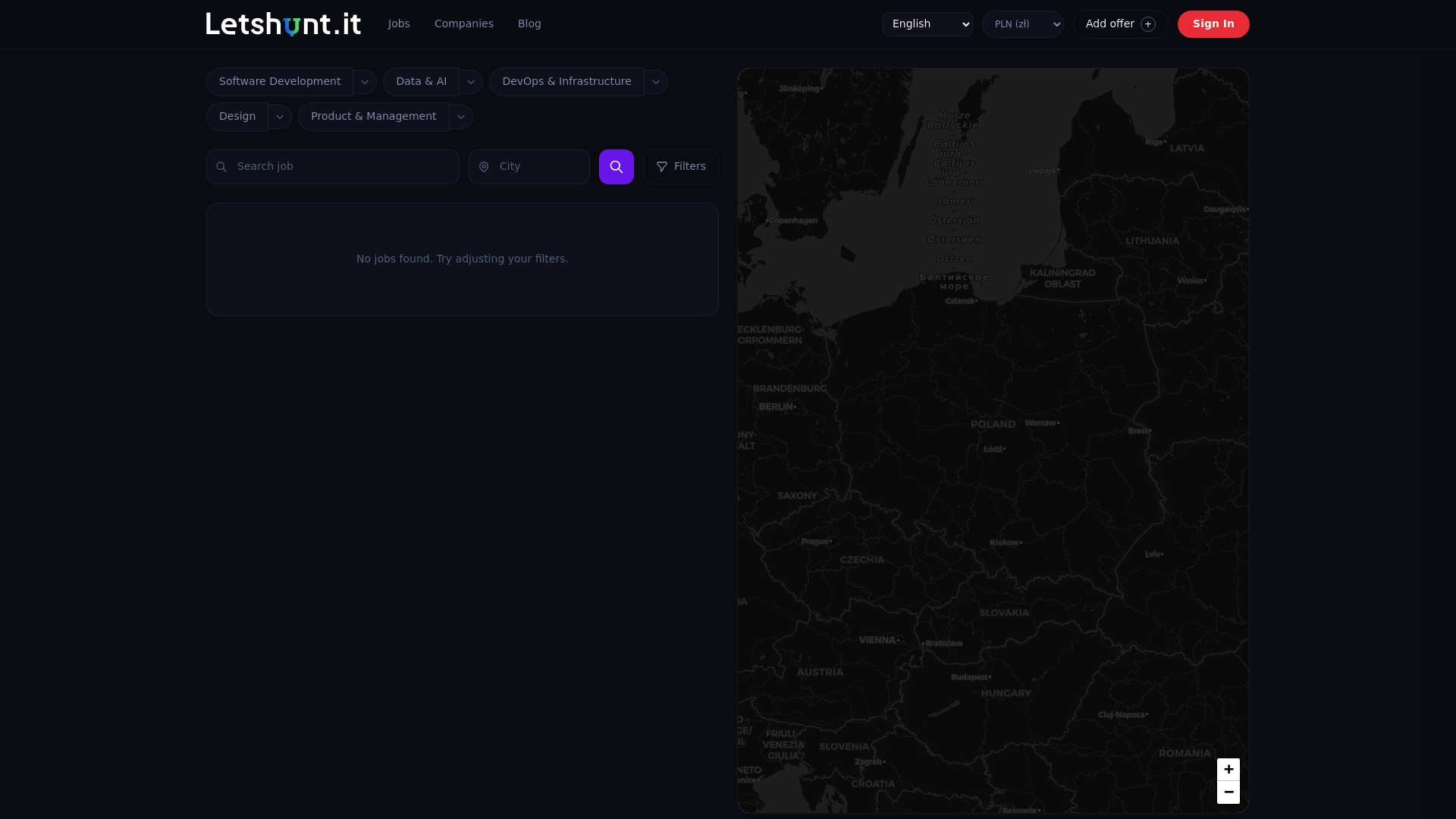
LetsHunt.it is designed specifically for tech professionals seeking remote, hybrid, and on-site roles across software development, data and AI, DevOps, and product management. With a global reach and multilingual interface, it connects you to competitive opportunities without the noise. Browse latest tech jobs now and put everything you've learned in this guide to work immediately.
Frequently asked questions
How do job portals help IT professionals secure international positions?
Job portals provide access to global employers, remote listings, and skill-matching tools that surface your profile to top global portals like Dice, Stack Overflow, LinkedIn, Built In, and Wellfound, where international recruiters actively search for tech talent.
Are job portal AI tools safe with personal data?
AI matching and interviews improve hiring outcomes, but engineering candidates wary of data misuse should review each portal's privacy policy and adjust visibility settings before applying.
Which features set IT job portals apart from general job sites?
IT-focused portals offer stack-level skill filters, AI-driven matching, and domain-specific categories. Job portal development mechanics like resume parsing and analytics dashboards make tech job hunting significantly more targeted.
Can social media profiles influence IT hiring on job portals?
Yes. Social media content actively moderates how employers perceive a candidate's competence and organizational fit, often before the first conversation even happens.